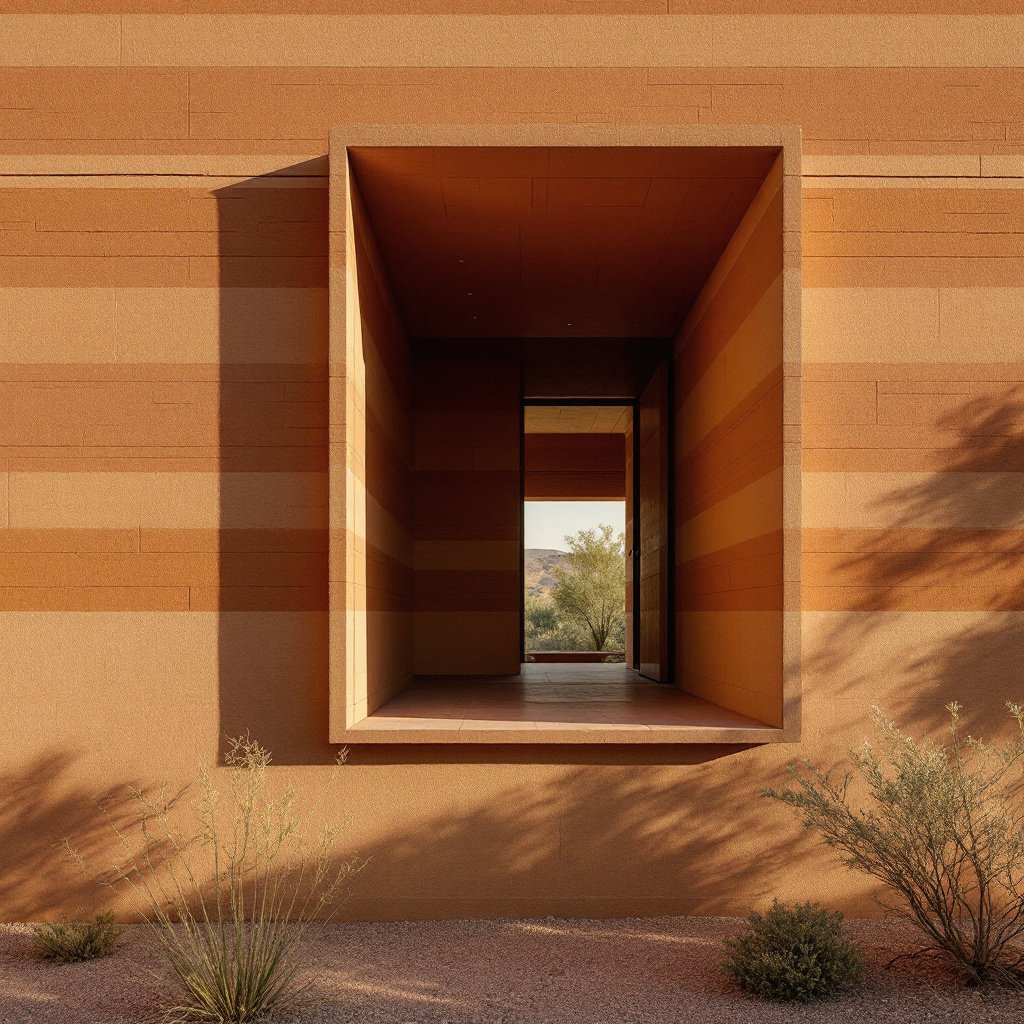
Casper sits where the river bends and the mountain starts, in the middle of our home state. We build estate-grade rammed earth for central Wyoming’s wind, its winters and its long clear light. From $1M.
Request a Consultation Call (307) 217-5491← Back to our Wyoming service area
Casper is a crossroads town in the most literal sense. The Oregon, Mormon and California trails all funneled through this stretch of the North Platte, and for the same reason people still live here: the river cuts a usable line through open country, and Casper Mountain rises immediately south to break the horizon and give the valley a wall to sit against. That geography produces a specific building problem and a specific building answer. Out on the flats, the wind runs unchecked and the light is enormous. Up on the mountain benches, the ground steepens, the snow deepens, and the views turn into the main event. Both conditions reward the same thing (mass) and neither one flatters a lightweight house.
Rammed earth is what mass looks like when a builder takes it seriously. Eighteen to twenty-four inches of mineral ground, compacted in lifts, banded in the sedimentary colors of the country it came from. There is no cladding to fail, no siding joint for wind-driven snow to find, no material that reads as temporary. Against central Wyoming’s scale, the wall does not compete with the landscape; it answers it in the landscape’s own vocabulary. The strata in a finished wall are, in the end, the same argument the river cut through the rock outside your window, layers, laid down and left alone.
There is a practical dimension too. Bighorn Rammed Earth is a Wyoming company. Casper is a drive, not a flight, and every part of a custom build that depends on a builder actually showing up (sample panels, formwork inspections, the mid-build decisions nobody schedules) gets shorter and cheaper when the supervision chain is measured in hours instead of connections.
Casper is Natrona County’s seat and one of Wyoming’s two largest cities, an energy and services hub with a working economy and a deep bench of skilled trades. The estate market here is not a resort market, which changes the brief in useful ways. Buyers are, for the most part, people who live here year round: energy and professional families, ranch and land owners consolidating acreage, medical and legal professionals anchored to the regional hospital and courts, and a steady trickle of arrivals who ran the numbers on Wyoming’s tax and trust environment and decided the math was worth the winters.
The consequence is that a Casper estate is a full-time house, not a shoulder-season retreat. It has to handle January as gracefully as July, absorb a real family’s wear, and hold its value in a market where buyers know exactly what construction costs. That is precisely the brief rammed earth serves best. A house built to be occupied for decades and handed to somebody who cares about it is the only kind of house that fully repays a wall system designed around a century.
The other consequence is land. Central Wyoming acreage is priced sanely enough that a client’s budget can go into the building rather than the dirt, which is exactly the condition under which a premium wall assembly stops being a stretch and starts being obvious. On a coastal lot where the parcel eats seventy percent of the total, mass is a luxury. Here it is a choice you can actually make.
Wind first, because everything in this state starts there. Casper’s wind is not weather so much as climate, a persistent, working presence that tests every fastener, every panel edge, every lap joint on an annual cycle. Rammed earth’s answer is structural rather than clever: the wall is one continuous compacted mass, so there is nothing to lift, drum, rattle or fatigue. Owners describe the interior effect before they describe the exterior durability, and they are right to. Inside two feet of earth, a hard central-Wyoming blow becomes something you observe through the glass instead of listening to all evening.
Then the daily swing. At roughly five thousand feet under thin, clear air, Casper runs one of the wider diurnal temperature ranges on our service map, warm afternoons that fall away sharply the moment the sun goes behind the mountain, in nearly every season. Thermal mass is the exact instrument for that signature. The walls absorb the day’s heat and release it through the cold hours, so the indoor curve flattens while the outdoor one whipsaws. This is the single most persuasive thing about walking into an earthen house on a bright, cold Wyoming afternoon, and no photograph has ever conveyed it.
Third, snow and melt. Central Wyoming winters deliver drifting snow rather than steady accumulation, and spring arrives as an event. That drives detailing more than it drives the wall itself, which is the next section.
Ranch country has an old rule for anything expected to stand outside: give it good boots and a good hat. Every wall we build in Wyoming is detailed to that rule, and the phrase is not decorative, it maps onto two specific line items.
The boots are frost-depth concrete stem walls that lift the earthen mass clear of grade: above splash, above the drift line, above the spring melt that arrives across this country all at once. The hat is the roof, with our standard twenty-four to thirty-six inch overhangs engineered to the site’s wind and snow loads, throwing weather clear of the wall faces. Between the two, the detailing earns its keep at the openings. Heads, sills and reveals are designed for precipitation that travels sideways as often as it falls, because on the high plains, weather rarely has the courtesy to arrive from above. The wall material itself is stabilized rammed earth (five to ten percent cement, tuned to the blend and the exposure) compacted to a density that takes freeze-thaw cycling without spalling. We wrote a whole essay on this discipline: how the walls defeat water.
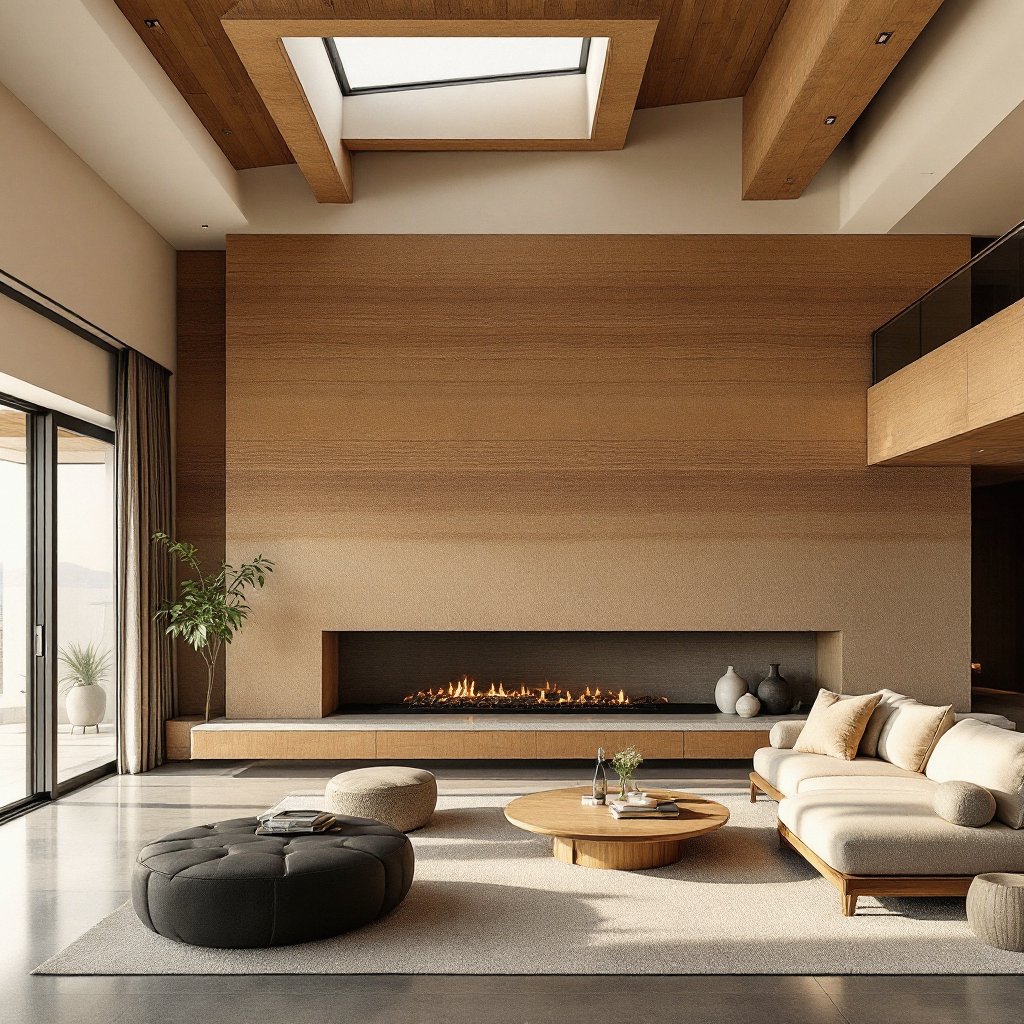
Casper winters are genuine, and mass alone is not a cold-climate strategy: anyone who tells you otherwise has not wintered in one. Our answer here is the same insulated-core assembly we detail for Teton weather in Jackson Hole and for the high plains in Cheyenne: two independent wythes of stabilized rammed earth around a continuous insulation core, so the visible material inside and out is pure strata while the wall section performs to modern four-season energy expectations.
The pairing is the point. Insulation decides how much heat leaves; mass decides when it moves. Together they turn the house into a thermal flywheel that is slow to chill, slow to overheat and largely indifferent to the wind chill figure on the morning news. Elevation then starts paying you back: Casper’s winter sun is low, bright and dependable, and south-facing glazing sized deliberately lets floors and mass walls bank that free heat through the afternoon and spend it back overnight, trimming the mechanical load in exactly the months it would otherwise peak. The mechanism is laid out in full in thermal mass, explained.
| Question | The Casper answer |
|---|---|
| Wall assembly | Insulated-core double-wythe, 18–24" total, strata faces inside and out (our cold-climate, four-season standard |
| Wind & weather | Boots-and-hat detailing) frost-depth stem walls below, engineered 24–36" overhangs above, openings detailed for horizontal weather and drifting snow |
| Timeline | 16–26 months from soil test to keys; ramming is warm-season work and we schedule around the Wyoming calendar honestly |
| Budget | Turnkey $250–$450+ per square foot; $1M residential minimum; feature and landscape walls $50–$225 per square foot of face |
| Soil | Central Wyoming ground varies sharply between river bottom and bench; every site gets test pits before design, and imported blend corrects whatever the parcel lacks |
Building in Casper means building where our name travels. The logistics reflect that: this is a drive-to market, which shortens every feedback loop that decides whether a custom home lands on its promise. City and county each run their own development review, and while rammed earth is less familiar to Wyoming jurisdictions than it is in the Southwest, the path is well worn for us. We arrive with stamped structural and energy documentation prepared for exactly this conversation, and a wall system that is non-combustible, visually quiet and demonstrably durable tends to make its own friends in review. Full numbers live in our cost guide, and the estate-grade scope of work is on the luxury homes page.
What we are really offering central Wyoming, though, is a match between material and temperament. This is a part of the world that respects things built heavy, built plainly and built to be handed down, where the most admired structure on a property is frequently the oldest one, and where nobody has ever been impressed by a wall you can put a fist through. Rammed earth is that sensibility rendered in its own medium: local mineral ground, compacted layer by layer into something that treats a century as a reasonable planning horizon. Beside a river that has been at this considerably longer, a house ought to think in the same units.
Request a Consultation Call (307) 217-5491
