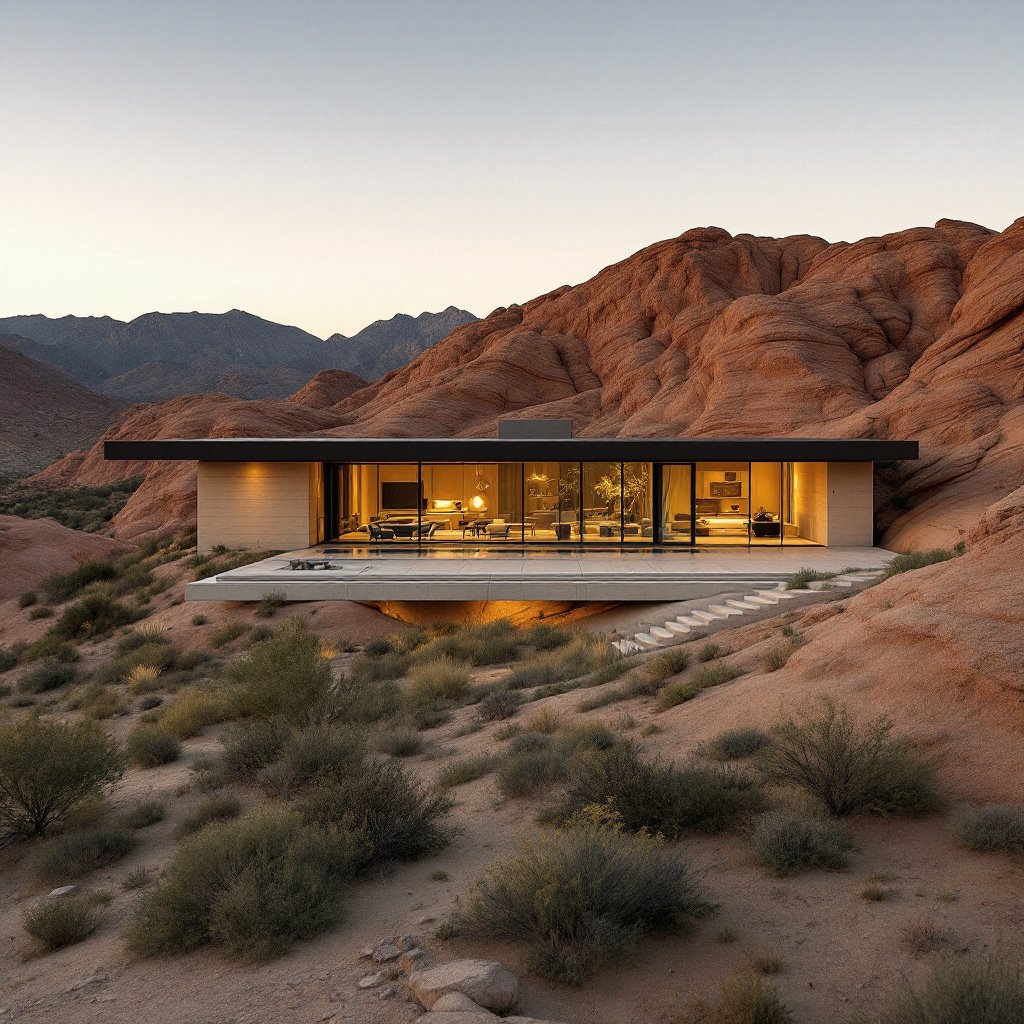
From Park City ski country to the oxide-red canyons of the south, Utah spans nearly every climate we engineer for, and some of the most beautiful wall soil in America. Estate-grade rammed earth from $1M.
Request a Consultation Call (307) 217-5491Because the state is two of our best arguments standing side by side. Southern Utah is high desert (iron-oxide soils, big diurnal temperature swings, sun that begs for thermal mass) geologic cousin to the Tucson country where the modern American rammed earth revival happened. Northern Utah is genuine alpine: Park City winters, Wasatch snow loads, hard freeze. One state, both of our wall assemblies, and a client base that has already demonstrated, at scale, its appetite for architecture built to be handed down. Few states let us show the material's full range without crossing a border.
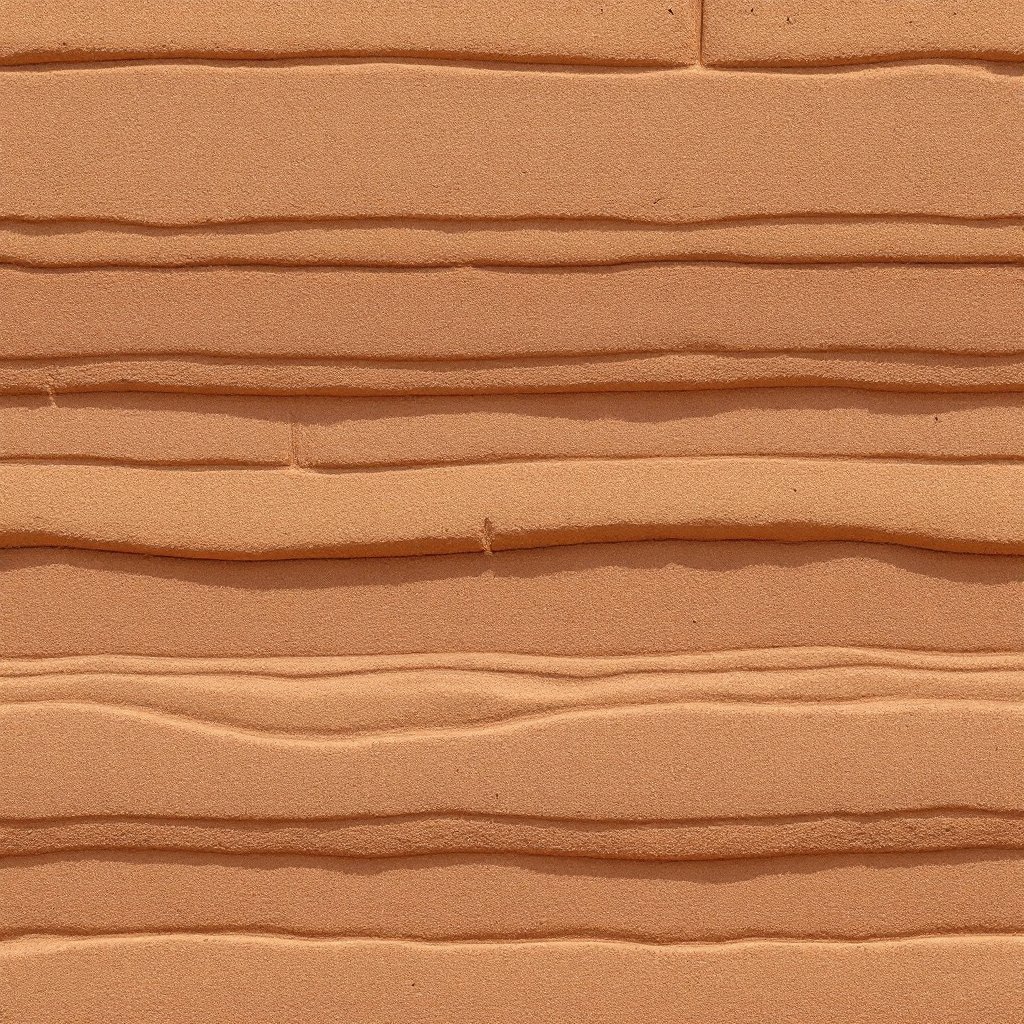
The walls themselves do not change character between the two: 18 to 24 inches of compacted, stabilized earth (5–10% cement content tuned to the blend) laid in strata that read like the canyon walls the state is famous for. What changes is the section. In the southern desert, single-mass walls do the classic work of banking the day's heat and spending it on the night. Along the Wasatch and in ski country, we build the insulated-core double-wythe assembly: two earthen wythes around a continuous insulation layer, pure strata inside and out, modern energy performance in between.
Park City, Deer Valley and the gated golf-and-ski communities of the Wasatch Back form one of the strongest luxury mountain markets in the country: a short drive from a major airport, a long roster of estate-caliber buyers, and an architectural culture that has been drifting from lodge nostalgia toward materials with real weight. Rammed earth arrives there as the logical next move: mass, permanence and texture that timber-and-stone builds gesture at, delivered monolithically. We keep a dedicated market and engineering guide at our Park City page.
Southern Utah deserves its own paragraph, because the soil deserves it. The Colorado Plateau's sandstone country (St. George, Kanab, Moab, the Capitol Reef fringe) weathers into iron-rich reds, roses and creams directly comparable to the Sedona soils that produce the Southwest's most photographed earthen walls. When a parcel's own ground tests right, the house is literally built from the mesa it looks at, and the strata carry the site's oxide signature without a drop of pigment. Climatically this is single-mass territory: hot brilliant days, cold desert nights, and thermal mass converting that swing into interior stillness. Monsoon-season cloudbursts get the same discipline as our Arizona work (deep overhangs, elevated stem walls, grading that throws water clear) and the wildfire-and-ember detailing that mineral walls make almost unfairly easy.
| Market | Elevation | Climate reality | Design response |
|---|---|---|---|
| Park City / Deer Valley | 6,500–8,000 ft | Serious snow, long winters, high-altitude sun | Insulated-core double-wythe, snow-rated deep overhangs, south glazing to winter sun, mudroom-and-spa ski programs |
| Salt Lake / Wasatch Front | 4,300–5,200 ft | Four full seasons, inversion winters, hot dry summers | Insulated-core walls; bench-lot seismic engineering; mass as acoustic refuge from the valley |
| Heber Valley / Midway | 5,600 ft | Cold high-valley winters, glorious summers | Double-wythe assembly, pastoral rooflines, deep protective eaves over generous porches |
| St. George / southwest | 2,800 ft | Hot desert, mild winters, monsoon bursts | Single-mass walls, passive-solar shading geometry, red-oxide strata blended from local ground |
| Moab / canyon country | 4,000 ft | High desert swings, remote access | Single-mass or hybrid walls, site-matched color, logistics planned honestly from day one |
Utah's family culture shapes its houses in a way few other states match. Multigenerational living is not a trend here; it is the default assumption of family life, and the estates we are asked about reflect it, separate wings for grandparents, bunk rooms engineered for cousin herds, great rooms sized for a family reunion that happens monthly rather than annually. Rammed earth is unusually well suited to that program. Mass walls give each wing genuine acoustic independence (a two-foot earthen wall is the end of the argument about the grandchildren's noise), the material's near-zero envelope maintenance suits a house that must serve for fifty years without becoming a burden, and the permanence is the point: a building meant to hold a family's gatherings for three generations should not be framed for a thirty-year mortgage cycle. This is heirloom architecture for a culture that already thinks in heirlooms.
The state's technology corridor has minted a generation of owners who evaluate a house the way they evaluate infrastructure: what is the envelope's service life, what does it cost to run, what is the failure mode. Rammed earth answers well. The wall system is passive, unpowered and effectively maintenance-free; thermal mass flattens the mechanical load curve; and the material's performance is physics rather than promises. These clients also tend to care about embodied carbon with actual rigor, and a wall made principally of local ground (stabilized at 5–10% rather than poured as full concrete) holds up under that scrutiny. We enjoy these design reviews. They come with spreadsheets, and the material wins spreadsheets.
Beyond the famous southern reds, the state's palette runs wide: granitic decomposed soils off the Wasatch with sparkle and bite; benchland gravels from ancient Lake Bonneville terraces that bring superb aggregate structure; buff and gray alluvium in the high valleys that rams into calm, quiet banding. Every parcel gets test pits before design, Utah's geology is generous but emphatic, and the difference between markets a few canyons apart can be a whole color family. Turnkey builds run $250–$450+ per square foot with a $1M residential minimum on 16–26 month timelines; commercial wall work (tasting rooms, resort arrival walls, civic pieces) runs $50–$225 per square foot of wall face.
We walk parcels with clients before they close, and the Utah checklist splits by region. In ski country: buy winter sun, not just view: a south-facing fall line lets mass floors bank low-angle light all season, while a north-pocket lot spends the same money fighting shade; confirm the access road can carry formwork trucks and a crane in mud season; and read the snow-shed paths off neighboring terrain before placing the entry. On the benches: geotechnical review comes first, since canyon-mouth ground varies lot to lot, and seismic setbacks are non-negotiable. In the red rock south: respect the washes exactly as we teach in Arizona, sample early for oxide color, and price the utility runs on remote parcels honestly. None of these are deal-breakers. All of them are cheaper to know on day one, which is why the parcel walk is part of our consultation rather than an extra.
Utah's growth-hardened building departments process engineered custom construction daily, and our stamped structural and energy documentation is assembled for exactly that review; along the Wasatch Front, seismic design is part of the package and mass walls are engineered accordingly. Where appraisers lack earthen comparables we supply the precedent packet (from the Tucson revival's decades of stock to the 1850 Church of the Holy Cross still standing in South Carolina) that turns an unfamiliar asset into a documented one. Financing then follows the standard custom-estate draw schedule our fixed-scope contract was built for.
Request a Consultation Call (307) 217-5491
