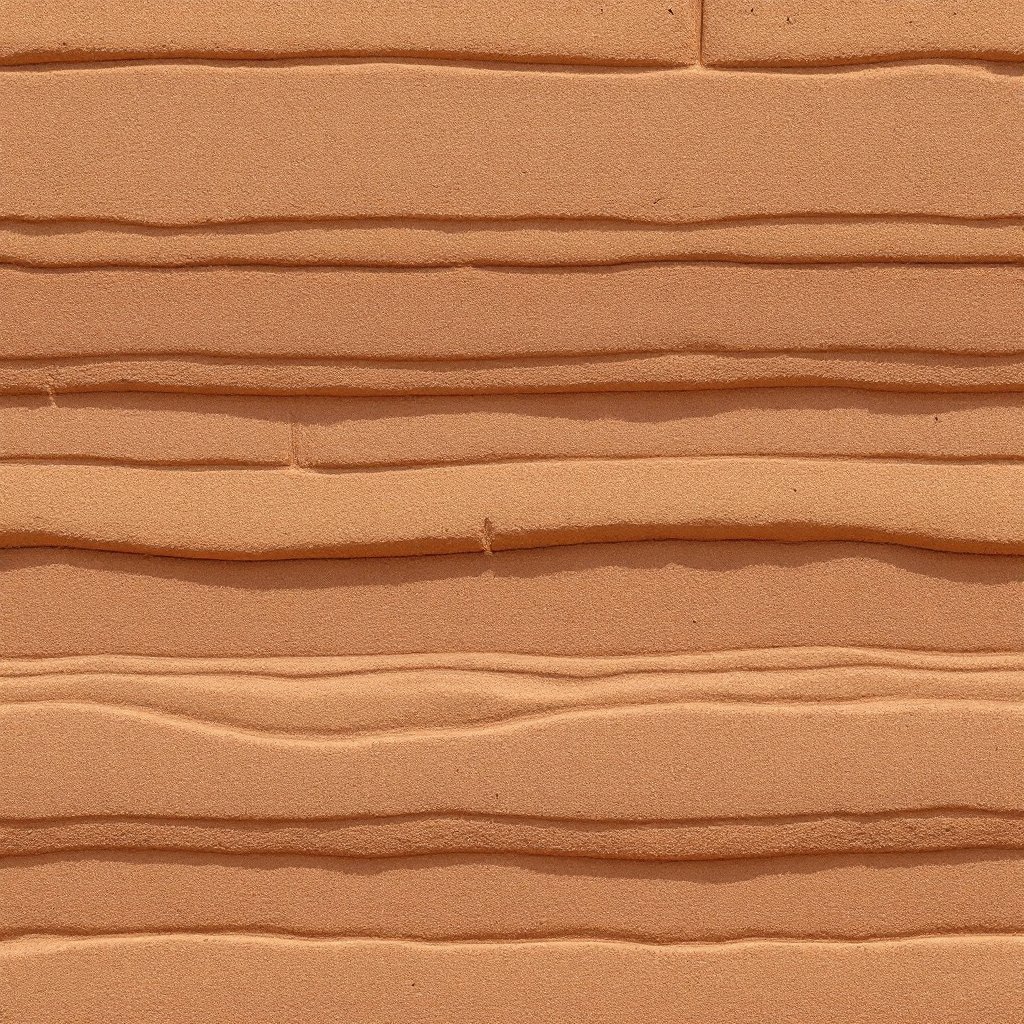
Entrada, Stone Cliff, Kayenta, the Snow Canyon fringe, Utah's fastest-growing luxury market sits on the most photogenic ground in the state, and keeps covering it with stucco. Single-wythe stabilized earth, rammed from iron-red soil. From $1M.
Request a Consultation Call (307) 217-5491← Back to our Utah service area
There is a small architectural absurdity at the heart of Utah's Dixie, and everyone who has driven Snow Canyon Parkway has felt it without naming it. St. George is surrounded by some of the most celebrated exposed geology in North America, Navajo sandstone in bands of rust and cream, black basalt flows, the vermilion shoulders of Snow Canyon and the Red Cliffs, and the houses put in front of that scenery are, almost without exception, frame-and-stucco boxes painted in approximations of the rock behind them. Painted. The entire regional aesthetic is an imitation of stratified earth, executed in materials that have nothing to do with it. Rammed earth ends the imitation. A wall of compacted local ground, 18 to 24 inches thick, carries the actual iron reds of the actual desert in its actual body (banded, mineral, and structural) so the house stops referencing the landscape and starts belonging to it.
The market context makes the argument commercial as well as aesthetic. Washington County has spent years among the fastest-growing metropolitan areas in the country, and the top of its housing market (the golf communities, the view lots, the architect-designed desert homes) is where that growth concentrates its money. Yet the luxury product is remarkably uniform: the same desert-contemporary stucco vocabulary, repeated from one gated entry to the next. In a market where every third house is chasing the same rendering, monumental earth is the rarest kind of differentiation, one that photographs unlike anything else in the county and outlasts everything around it. This is also, meteorologically, the easiest case we make anywhere in Utah. The Mojave-edge desert is the material's home climate, and the precedent next door proves it: the Nk'Mip Desert Cultural Centre in British Columbia's desert country has stood in rammed earth since 2006, and the deep record (sections of the Great Wall at two millennia and counting, an American lineage running since the 1780s) was largely written in ground like this.
St. George is classic single-wythe territory, the simplest, purest expression of the craft we build anywhere. One monolithic wythe of stabilized rammed earth, 18 to 24 inches thick, 5–10% cement stabilization tuned to the local blend, the same stratified face serving as structure, exterior finish and interior finish at once. No veneer, no cladding, no layers pretending to be one another. In a hot arid climate the physics run entirely in the wall's favor: the desert's dramatic diurnal swing (triple-digit afternoons falling to genuinely cool nights for much of the year) is precisely the oscillation thermal mass averages out. The wall absorbs the afternoon at its face, works the heat slowly through two feet of compacted mineral, and releases it into the night hours after the sun has quit, while interior surfaces hold the steady, cave-cool composure that framed construction in this valley spends all summer paying the power company to fake.
The rest of the section follows our standing doctrine, good boots, good hat. Concrete stem walls poured to frost depth keep the earthen wall clear of grade, irrigation splash and the desert's occasional theatrical storms; our standard 24–36 inch roof overhangs put the wall face in shade through the worst of the summer sun while managing the monsoon-style downpours that arrive a few afternoons a year with real intent. Water is rare here, which is exactly why it must be taken seriously, a desert wall sees less rain than a Tennessee wall but sees it harder. And every parcel, whether lava-field ground at Entrada or deep alluvium in Washington Fields, gets test pits before design: for the geotechnical facts, and for the color audit that in this county is half the fun.
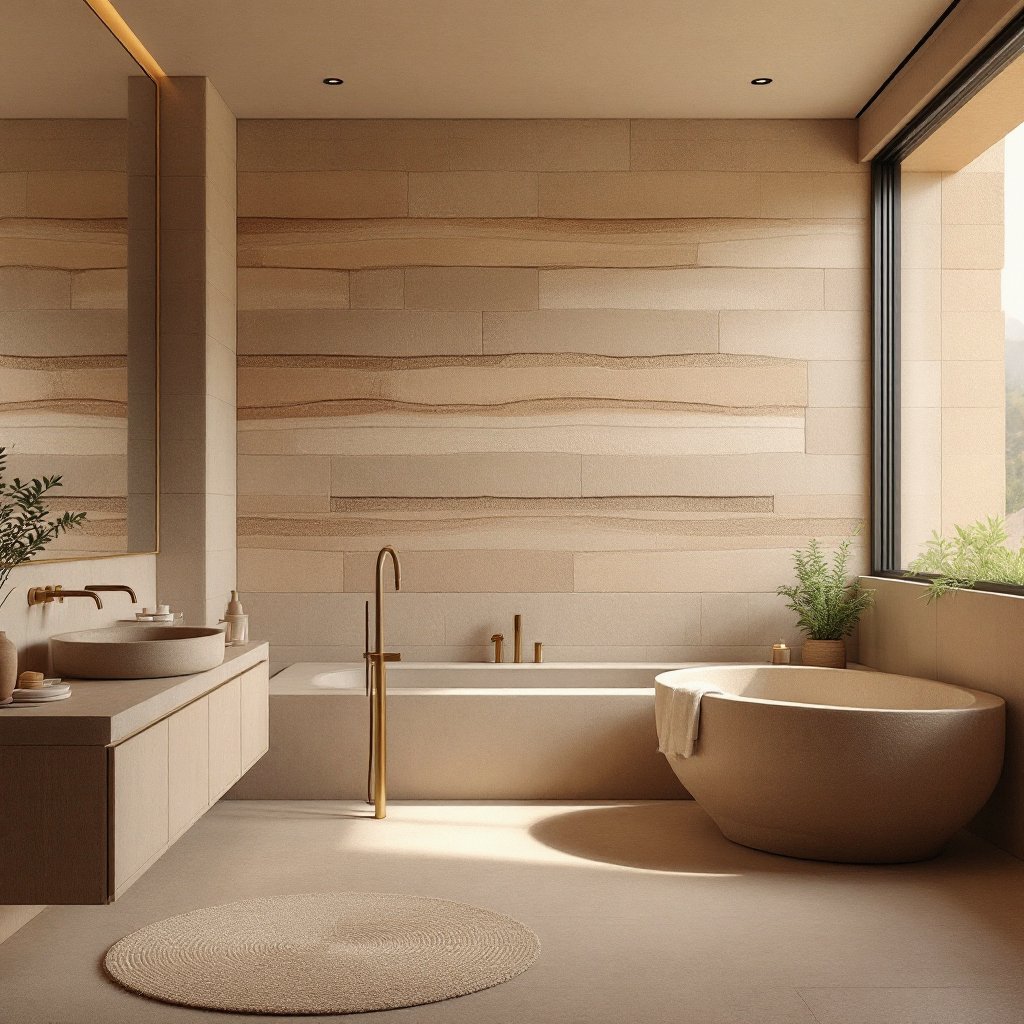
Every region we build in has a palette; St. George has a signature. The soils of the Red Cliffs country are saturated with iron (true rusts, terracottas, oxblood reds shading to rose and cream where the sandstone lightens) and those colors go into the formwork and come out in the wall, lift by lift, as permanent mineral fact. No pigment coat to fade under the hardest UV in the state, no stucco tint to chalk out by the second decade: the color is the material, all the way through, and it weathers the way the cliffs do, which is to say it improves. For owners who want composition rather than uniformity, banding is designed course by course against the mockup panel (red rock strata interpreted rather than photocopied) and where a scheme calls for contrast, lighter blends or oxide adjustments are tuned the same way. This is, candidly, the best raw palette we work with anywhere in the state, and the mockup-first process exists so you approve the actual wall, rammed from your actual ground, before full production begins. Beyond the house itself, the same material serves the landscape: freestanding earthen monoliths, courtyard and entry walls that run $15K–$60K, turning the approach to the house into part of its architecture.
A large share of the St. George luxury market lives here from October to May and somewhere cooler the rest of the year, and rammed earth may be the most lock-and-leave construction available to that owner. Consider what a summer absence asks of a house in this climate: months of hundred-degree heat, hammering UV, thermal cycling every single day, conditions that age painted stucco, sealed joints and cladding systems on an accelerated clock precisely when nobody is there to notice. A stabilized earthen wall spends those same months doing nothing that requires supervision. There is no paint film to blister, nothing organic in the wall to dry out or host pests, no veneer ties working loose, and the mass itself keeps the interior's thermal behavior slow and even under whatever setback the owner chooses. The maintenance calendar is essentially inspection. For households structuring their year across two residences (and for heirs who will inherit the house rather than a renovation schedule) construction that ages on a geologic clock is not a poetic flourish; it is the correct asset class for the desert half of the portfolio.
The desert's growth has pushed its neighborhoods hard against the wildland edge (lava fields, brush slopes and canyon fringe sit directly behind some of the county's best addresses) and fire-conscious design is now simply part of building well here. Rammed earth's contribution is unambiguous: the wall is solid compacted mineral, non-combustible by nature rather than by treatment, with no cladding, no siding and nothing in the wall assembly itself for an ember to take hold of. The same qualities carry the design-review conversation. St. George's premier communities run serious architectural review (palettes keyed to the landscape, reflectivity limits, materials expected to defer to the setting) and a stratified earthen wall arrives as the most literal possible compliance: the landscape itself, compacted into architecture. Our mockup-first process gives an HOA board a physical panel to approve rather than a rendering to debate, and our stamped structural documentation answers the building department in its own language. Timelines run 16–26 months from soil test to keys; the desert's kindness to construction schedules (long dry seasons, workable winters) is one of the few places the calendar here is easier than everywhere else we build.
| Question | The St. George answer |
|---|---|
| Wall assembly | Single-wythe stabilized rammed earth, 18–24" thick, 5–10% cement, one monolithic strata face inside and out |
| Heat & water | Thermal mass tuned to desert diurnal swings; 24–36" overhangs, frost-depth stem walls, drainage sized to monsoon bursts |
| Palette | Iron-red local soils (rusts, terracottas, creams) color permanent through the full wall, banded by design |
| Timeline | 16–26 months soil test to keys; the desert calendar is the friendliest we build in |
| Budget | Turnkey $250–$450+ per square foot; $1M residential minimum; landscape monoliths $15K–$60K |
St. George is a young luxury market in an old landscape: most of its finest neighborhoods are a few decades old at most, standing in front of cliffs that took two hundred million years. Most of what is being built here will be remodeled beyond recognition within a generation; that is the nature of stucco-and-frame construction and the market it serves. Rammed earth proposes a different relationship with the place. A monolithic earthen house does not participate in the renovation cycle in any meaningful way: its walls are finished the day the forms come off and are still finished, unchanged, when the second and third owners take the keys. In a county whose entire appeal is geological time, there is something correct about a house that keeps a little of it. The cliffs got two hundred million years. We would settle for outlasting every stucco house on the street, and the material's record suggests that is a conservative ambition.
Request a Consultation Call (307) 217-5491
