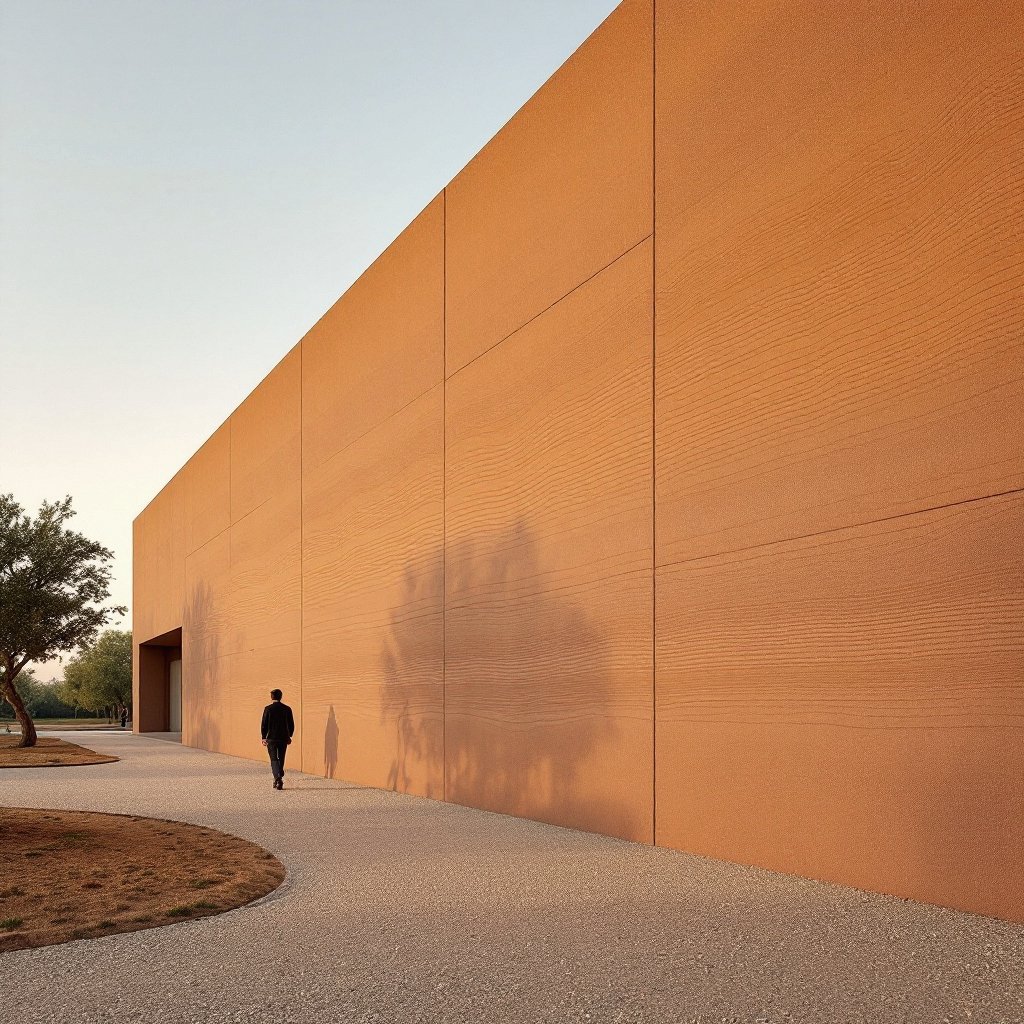
One is the world's most used material; the other is its ancient, better-mannered cousin. Here's the comparison without the propaganda, from people who respect both.
Request a Consultation Call (307) 217-5491Structural concrete typically tests 3,000–5,000 PSI; stabilized rammed earth typically tests 750–2,500 PSI depending on mix and stabilization. So concrete wins the lab number, and the lab number barely matters for houses. Residential loads use a fraction of either material's capacity, and rammed earth walls are 3–4× thicker than concrete equivalents, so the wall as a system carries residential and most commercial structures with engineering headroom to spare. Where genuine high-strength engineering is needed (long spans, tall structures), concrete and steel join the party: our builds use them exactly where they belong.
Both materials have thermal mass; earth uses its better. A concrete wall conducts heat readily (concrete homes insulate outside the mass to compensate); earth's lower conductivity plus enormous thickness makes the wall itself a thermal flywheel, absorbing afternoon heat, releasing it at night, holding interiors in a narrow comfort band. In insulated-core assemblies for cold climates, earth delivers mass inside the insulation where it works hardest. Concrete can be engineered to match this; earth does it natively.
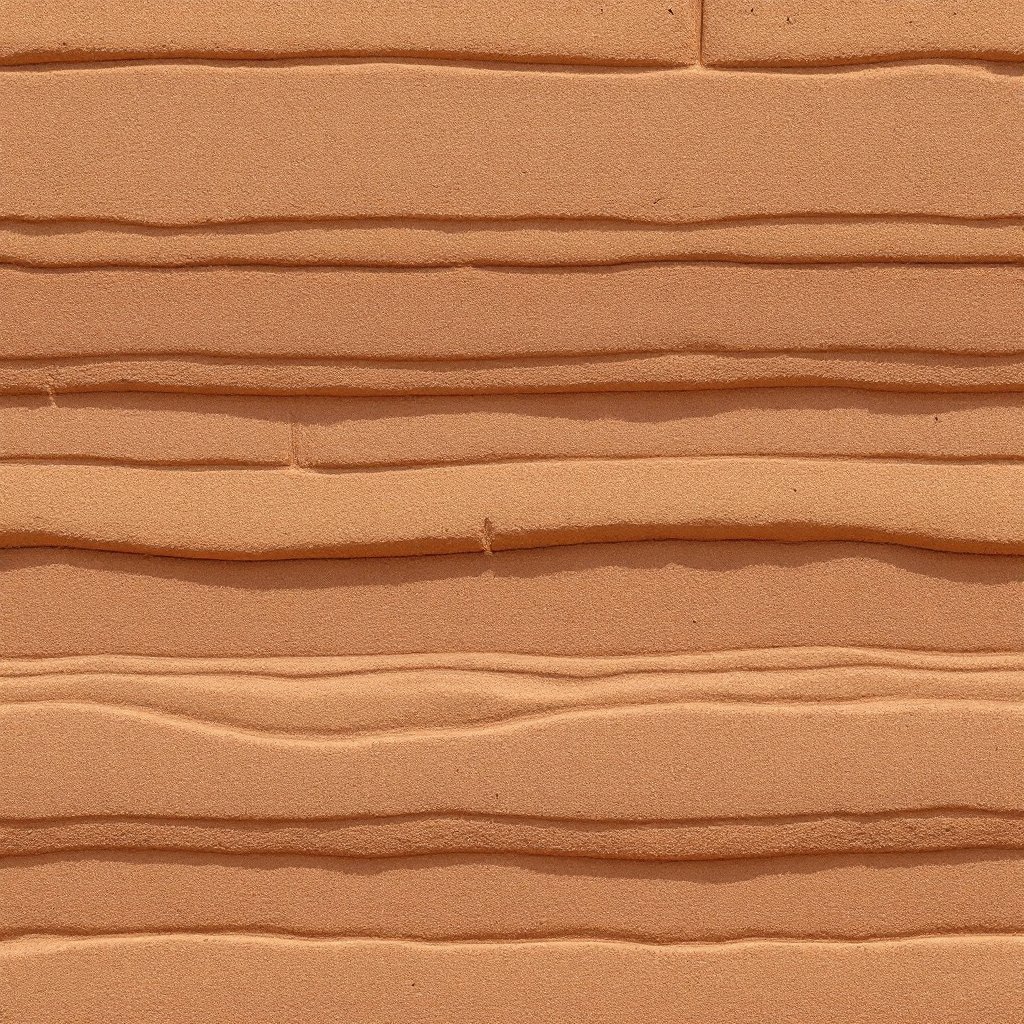
Cement production accounts for roughly 8% of global CO2 emissions, and a concrete wall is mostly cement paste and imported aggregate. A stabilized rammed earth wall uses 5–10% cement in locally sourced soil (a fraction of the embodied carbon per wall) and unstabilized assemblies (where climate and code allow) approach zero. For clients and brands with real sustainability commitments, this is the most defensible envelope decision on the market.
Poured concrete walls beat rammed earth on raw installed price; finished-wall comparisons flip the math, since concrete still needs insulation, furring, drywall inside and cladding outside, while earth arrives finished on both faces. At luxury spec (where the alternative is architectural concrete or full-bed stone) rammed earth is competitive to favorable, and it appreciates as a story concrete can't tell.
Use concrete where engineering demands it: foundations, lintels, long spans (we do). Use rammed earth where humans live: for warmth, silence, breathability, beauty and carbon numbers. The best contemporary earth buildings aren't concrete-versus-earth: they're both materials doing what each does best.
| Property | Stabilized rammed earth | Residential concrete |
|---|---|---|
| Compressive strength | 750–2,500 PSI | 3,000–5,000 PSI |
| Typical wall thickness | 18–24 in | 6–8 in |
| Wall system R-value behavior | Mass-enhanced; insulated-core assemblies meet cold-climate code | Requires added insulation layer |
| Embodied carbon (wall) | Fraction of concrete; near-zero unstabilized | High (cement-dominated |
| Interior finish required | None) strata is the finish | Furring + drywall + paint |
| Exterior finish required | Breathable sealer | Cladding or architectural forming premium |
| Vapor behavior | Breathable, humidity-buffering | Vapor-closed |
| Acoustic character | Massive, warm, dead-quiet | Massive, reflective |
| Repair aesthetics | Color-matched patch reads as geology | Patches read as patches |
| Proven lifespan | 2,000+ years (unstabilized ancestors) | ~150 years of industry history |
The framing of 'versus' is marketing; the practice is marriage. Every Bighorn home stands on concrete foundations and stem walls, spans openings with reinforced lintels and bond beams, and uses steel where tension lives. Concrete is unbeatable below grade and in bending; earth is unbeatable where humans spend their hours. The design question is never which material wins, it's which material belongs at each location in the load path and the day. That's also the honest answer to give any engineer skeptical of the material: we're not asking earth to do concrete's job, we're relieving concrete of the jobs it does expensively.
Concrete rarely shows up bare. Most buyers are actually weighing rammed earth against one of its dressed-up forms, so here are the honest matchups.
ICF pours concrete between foam panels that stay in place. It's fast, well insulated and thoroughly code-familiar, genuinely good construction. What it can't do is show itself: the finished wall is foam awaiting siding or stucco, its structure hidden and its foam permanent. Rammed earth delivers mass-wall performance in a four-season insulated assembly while being its own finish inside and out, and its body is earth, not a petrochemical sandwich. ICF wins on speed and trade availability; rammed earth wins on beauty, breathability and embodied carbon.
Concrete masonry is the workhorse of commercial walls: cheap, strong, everywhere. It is also, by universal agreement, a material you cover. Block delivers structure per dollar; rammed earth delivers structure, finish, thermal mass and identity in a single operation. On projects where the wall is meant to be seen (and at $75–$225 per square foot, commercial rammed earth is priced for exactly those) block plus cladding plus interior finish often lands closer to the earthen number than the bare block price suggests.
The comparison that flatters rammed earth most. Veneer is an inch of geology glued to a framed wall, mass as image, with none of mass's physics. It costs serious money, does no structural work, stores no meaningful heat, and the lumber behind it still rots, burns and feeds termites. A rammed earth wall is the thing veneer is impersonating.
| System | Wins on | Concedes |
|---|---|---|
| Rammed earth | Finish and structure in one, thermal mass, breathability, embodied carbon, permanence | Placement speed, trade availability, below-grade use |
| Poured concrete | Tension, long spans, below grade, the seismic benchmark | Cement's carbon intensity; needs finishing on both faces |
| ICF | Speed, insulation, code familiarity | Permanent foam core; must be clad; nothing to admire |
| CMU block | Cost per structural foot, ubiquity | Needs cladding and interior finish; modest thermal mass per dollar spent on looks |
| Stone veneer on frame | The stone image at framed-house logistics | No structure, no mass: the substrate still rots and burns |
Honestly: reinforced concrete is the seismic benchmark, and in high-seismic country it keeps the crown. But modern rammed earth is engineered, not stacked. Steel reinforcement, concrete bond beams and stem walls tie the mass into a system that stamped structural calculations stand behind, and stabilized walls testing 750–2,500 PSI carry residential loads with margin to spare. In the low-to-moderate seismic conditions typical of our service region, properly engineered rammed earth is a settled question: the engineer sizes the reinforcement and signs the drawings, exactly as with any masonry structure. In genuinely demanding seismic zones, the calculations may steer a mass wall toward concrete instead, and when they do, we follow the math rather than the brochure.
Concrete, usually. Placement is a pour, and the industry has spent a century optimizing it; rammed earth rises lift by lift, 6–8 inches at a time, and a home's wall phase runs weeks rather than days. Two caveats keep the gap honest. First, rammed walls strike from the forms finished, the cladding, drywall, taping and painting phases that trail concrete and framing simply don't exist. Second, on a custom estate the calendar is dominated by design, approvals and finish work; the wall method moves the total timeline far less than buyers expect. Faster to place is not the same as faster to done.
Regularly. A resource hub that pretends its material does everything isn't a resource. Plainly:
The finished building is a partnership: concrete where tension and water live, earth where people do. Knowing exactly where that boundary runs is most of the craft, and a good reason to be suspicious of anyone selling a material instead of a building.
Request a Consultation Call (307) 217-5491
