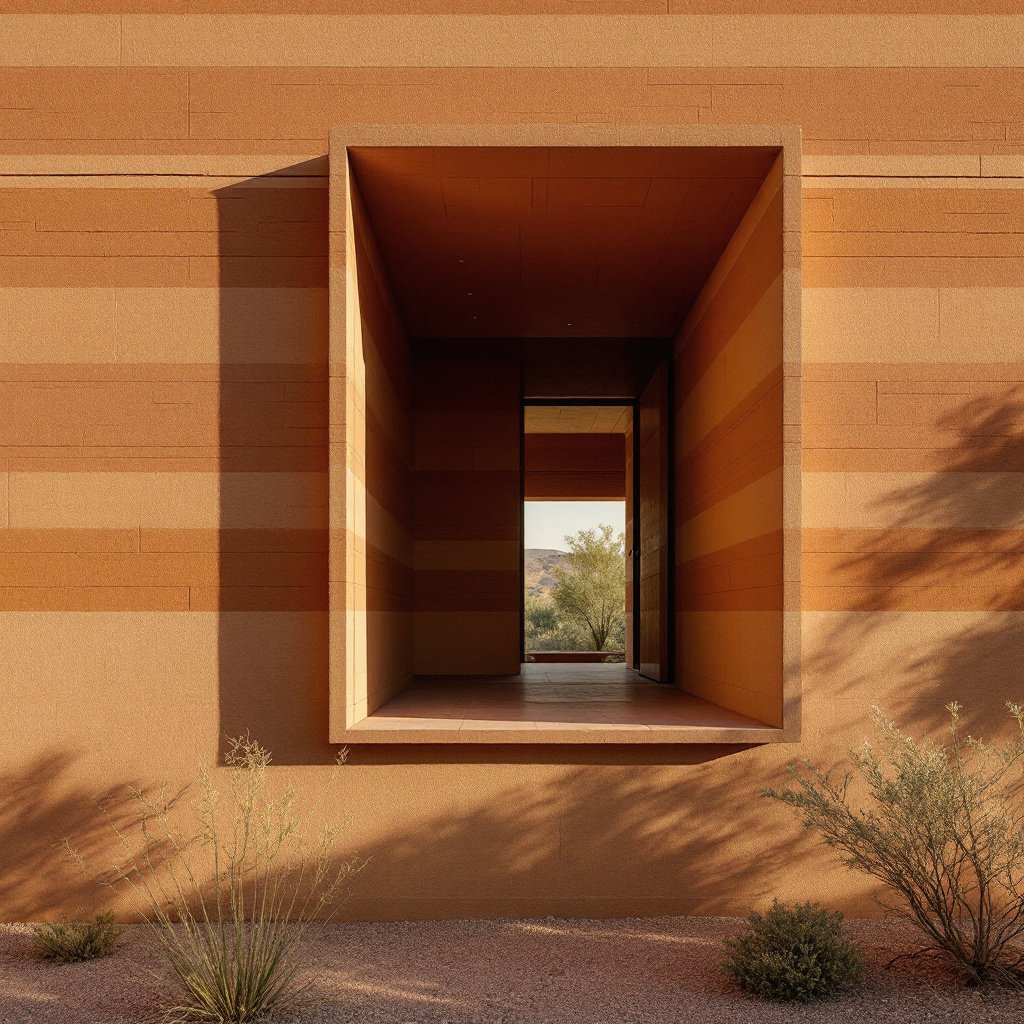
Cheyenne is our home state's capital, and the high plains around it are the most honest test a wall can take, wind, cold and 6,000-foot sun. We build estate-grade rammed earth made for exactly that. From $1M.
Request a Consultation Call (307) 217-5491← Back to our Wyoming service area
The high plains do not flatter a building. There is no canyon to tuck into, no tree line to hide behind, no gentle microclimate doing part of the work, just grassland running to the horizon in every direction, a sky that takes up most of the view, and weather that arrives with nothing in its way. Architecture out here has always sorted itself into two categories: buildings that apologize for being on the plains, and buildings that answer them. The homestead generation understood the assignment instinctively. They banked earth against their walls, planted shelterbelts, built low and thick, and treated mass as the first line of defense rather than a luxury. A rammed earth wall (18 to 24 inches of compacted, stratified ground, banded in the colors of the site itself) is that same plains logic carried to its architectural conclusion.
There is also the matter of allegiance. Bighorn Rammed Earth is a Wyoming-domiciled company, and Cheyenne is the capital of the state we call home. Most of our service map involves an airplane; southeast Wyoming involves a truck. When we describe a build here as a home-state project, we mean it in the plain, operational sense, short supervision chains, a calendar we can adjust on a day's notice, and a builder whose stake in Wyoming's ground is not rhetorical. The state's ranch-country building sensibility (do it heavy, do it once, let it outlive you) is not a marketing angle we adopted for this page. It is the sensibility the company was built on.
Cheyenne is the state capital and its largest city, the anchor of Laramie County and the working end of Wyoming, government, rail heritage, and an economy that has been quietly diversifying for years. The luxury story here is not a resort story; it is a land story. The estate market lives on acreage: ranch and rural parcels east and north of town where lots are measured in tens of acres, the horizon is the property line that matters, and a house is expected to hold its own against the view rather than borrow someone else's. Buyers include long-tenured ranch families consolidating a legacy, professionals anchored to the capital, and a growing cohort of arrivals drawn by the same fundamentals that shape the rest of the state, no state income tax, owner-friendly trust law, and land priced sanely enough that the budget can go into the building instead of the dirt. Cheyenne's position near the Front Range corridor adds a practical dimension: this is high-plains Wyoming living within striking distance of big-city infrastructure, and the estates being built here increasingly reflect full-time, year-round programs. That is precisely the brief rammed earth serves best, a permanent house for people who intend to stay.
Start with the wind, because everything here does. Southeast Wyoming's wind is not an event; it is a condition, a steady, working presence that finds every loose shingle, every rattling panel, every gap in a lightweight assembly, and files a complaint daily. Rammed earth answers it with the simplest possible argument: monolithic mass. There is no siding to peel, no cladding to drum, no veneer waiting for a fastener to fatigue. The wall is one continuous compacted thing, and the wind can push on it for a century without finding a seam. The second answer is quieter, literally, inside two feet of earth, a forty-mile-per-hour afternoon is something you watch through the glass rather than listen to through the walls. On the plains, that interior stillness is not a nicety. It is the difference between a house you tolerate in March and one you love in March.
Then the swings. At 6,000-plus feet under a thin, clear atmosphere, the high plains run one of the widest daily temperature ranges on our service map, bright, warm afternoons falling off a cliff at sundown, in every season. Thermal mass is the instrument built for exactly this signature. The walls absorb the day's heat and release it through the cold hours, flattening the indoor curve while the outdoor one whipsaws. Homeowners describe the effect as the house running a few hours behind the weather (cool through the hot afternoon, warm long into the night) and it is the single most persuasive thing about walking into an earthen house on a plains day.
Ranch country has an old rule for anything that has to stand outside: give it good boots and a good hat. We detail every high-plains wall to that rule. The boots are frost-depth concrete stem walls that lift the earthen mass well clear of grade, above splash, above drifting snow, above the spring melt that arrives across this country as an event rather than a season. The hat is the roof: our standard 24–36 inch overhangs, engineered for the site's wind and snow conditions, throwing weather clear of the wall faces. Between boots and hat, the detailing earns its keep at every opening, heads, sills and reveals designed for rain and snow that travel horizontally as often as they fall, because on the plains, weather does not politely arrive from above. The walls themselves are stabilized rammed earth, 5–10% cement content tuned to the blend and the exposure, compacted to a density that shrugs off freeze-thaw cycling without spalling. None of this is exotic. It is the same discipline the region's best barns and ranch headquarters have always been built with, applied to a wall system with far more to offer.
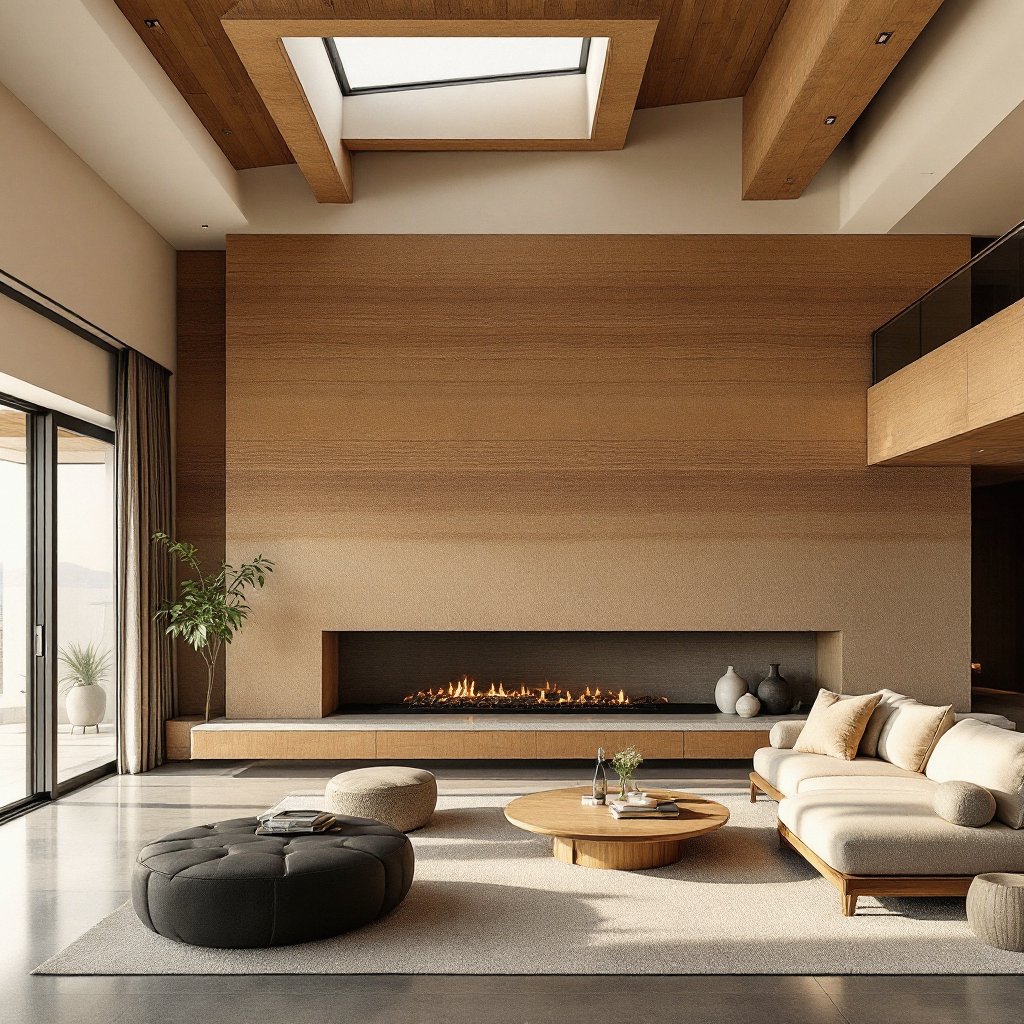
Cheyenne's winters are genuine (long, cold and windy) and mass alone is not a cold-climate strategy. Our answer here is the same insulated-core assembly we detail for Teton winters in Jackson Hole: two independent wythes of stabilized rammed earth around a continuous insulation core, so the visible material inside and out is pure strata while the wall section performs to modern cold-climate, four-season energy expectations. The pairing matters. Insulation stops heat from leaving; mass decides when it moves. Together they turn the house into a thermal flywheel, slow to chill, slow to overheat, indifferent to the wind chill number on the morning news.
The elevation then starts paying you back. At 6,000 feet the atmosphere is thin and the sunshine is relentless, southeast Wyoming's winter sun is bright, low-angled and dependable in a way lowland climates never manage. South-facing glazing, sized deliberately, lets floors and mass walls bank that free heat through the afternoon and spend it back through the night, trimming the mechanical load in the exact months it would otherwise peak. The same thickness works the summer shift without being asked: hot, glaring July afternoons stay outside, the night's hard cool gets flushed through and stored, and the house rides the swing with the composure of a root cellar that learned architecture.
| Question | The Cheyenne answer |
|---|---|
| Wall assembly | Insulated-core double-wythe, 18–24" total, strata faces inside and out (the cold-climate, four-season standard |
| Wind & weather | Boots-and-hat detailing) frost-depth stem walls below, engineered 24–36" overhangs above, openings detailed for horizontal weather |
| Timeline | 16–26 months soil test to keys; ramming is warm-season work and we schedule around the plains calendar honestly |
| Budget | Turnkey $250–$450+ per square foot; $1M residential minimum; feature and landscape walls $50–$225 per square foot of face |
| Soil | High-plains ground varies parcel to parcel; every site gets test pits before design, and imported blend corrects what the site lacks |
Building in Cheyenne means building where our name is on the line in the most local possible way. The logistics reflect it: this is a drive-to market, which shortens every feedback loop that matters, site visits, sample panels, formwork inspections, the unglamorous mid-build conversations that decide whether a custom home lands on its promise. City and county each run their own development review, and while rammed earth is less familiar to plains jurisdictions than it is in the Southwest, the path is well worn for us: we arrive with stamped structural and energy documentation prepared for exactly this conversation, and a wall system that is non-combustible, visually quiet and demonstrably durable tends to make its own friends in review. We keep the promises specific and the process transparent, full numbers are laid out in our cost guide, and the estate-grade scope of work lives on our luxury homes page.
What we are really offering southeast Wyoming, though, is a match between material and temperament. This is a part of the world that respects things built heavy, built plainly and built to be handed down, a place where the best structures on a property are often the oldest ones, and where nobody has ever been impressed by a wall you can put a fist through. Rammed earth is the plains sensibility rendered in its own medium: local mineral ground, compacted layer by layer into something that treats a century as a reasonable planning horizon. Against a horizon this long, a house ought to think in the same units.
Request a Consultation Call (307) 217-5491
