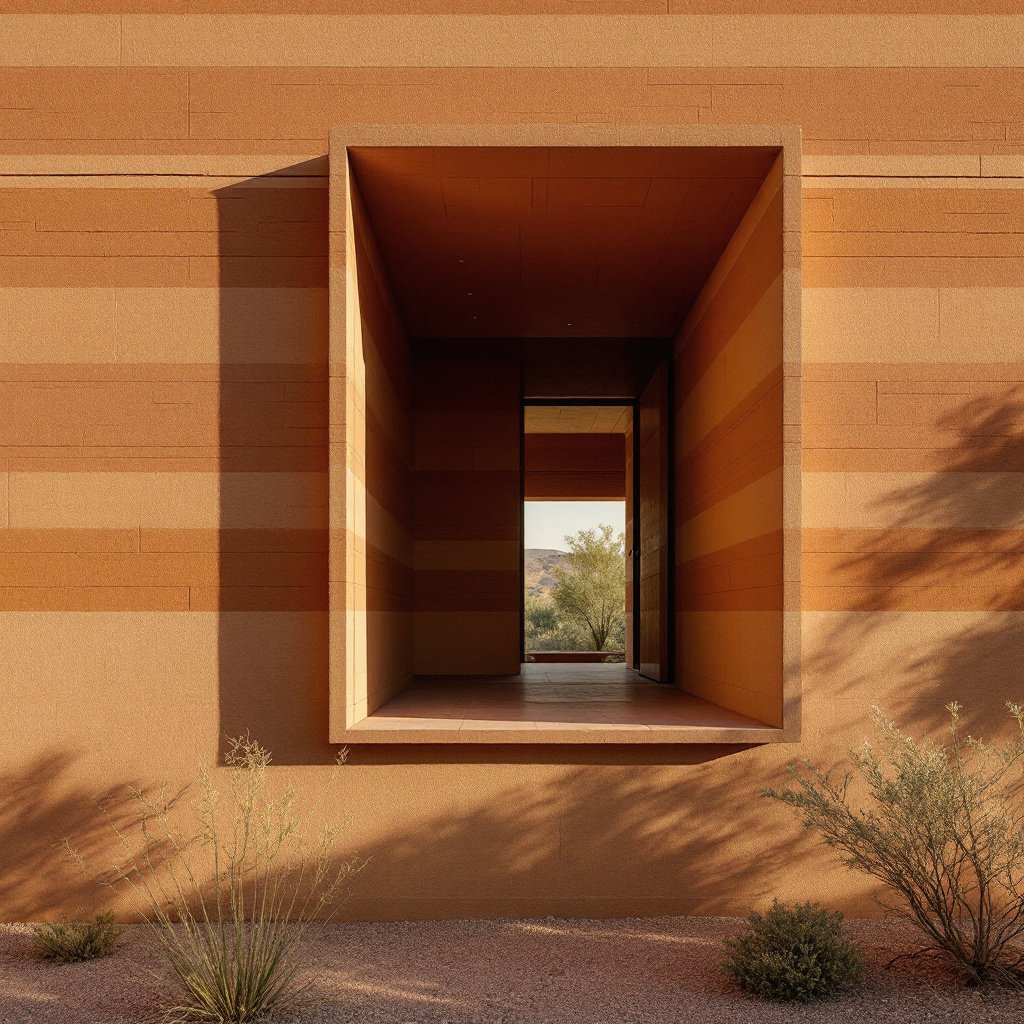
Carmel builds at a level almost no Midwestern suburb matches. We build the one material on that street that is mineral all the way through and engineered for Indiana freeze-thaw. From $1M.
Request a Consultation Call (307) 217-5491← Back to our Indiana service area
Carmel is an unusual American place to build. Hamilton County has spent thirty years accumulating exactly the conditions a serious custom home market needs, money, a design-literate population, a municipal government that has been openly, expensively interested in how the city looks, and a building community that has been executing high-end residential work long enough to be good at it. The result is a suburb where architecture is genuinely discussed, and where a client considering a seven-figure house is choosing between several credible ways to spend it rather than settling for the only builder in town.
That is the correct market for this material, and for an honest reason. In a place where the baseline is already high, the differentiating question stops being quality of finish and becomes quality of substance. Most high-end Midwestern houses, however beautifully executed, are wood frame wearing a masonry veneer, a hollow assembly with a stone-looking face. A rammed earth wall is not that. It is eighteen to twenty-four inches of compacted mineral ground, the same material front and back, structural and finish at once. There is no veneer to fail, no cavity to hold water, no substrate to rot. On a street where every house is good, it is the one that is solid.
The second reason is sensory, and it is what actually closes people. Carmel summers are humid and hot, Carmel winters are cold and gray, and both extremes get flattened inside a mass wall. Owners describe the effect as the house running a few hours behind the weather. Guests do not have the vocabulary for it and simply say it feels different in here. It does, and the mechanism is explained plainly in thermal mass, explained.
The Carmel and greater Hamilton County estate market runs on established neighborhoods with mature trees, generous lots and a buyer base of physicians, executives, business owners and professionals who intend to be in the house for decades. It is a full-time, four-season market (nothing here is a shoulder-season retreat) which means the building has to be excellent in February and August alike and absorb a real family’s daily wear without looking tired in year twelve.
It is also a knowledgeable market. Carmel buyers have generally built or renovated before, have opinions about millwork, and can read a bid. That works in this material’s favor rather than against it, because rammed earth’s case is not aesthetic novelty: it is a durability and comfort argument that survives scrutiny. We publish our full numbers in the cost guide precisely because clients at this level are going to ask, and a builder who gets uncomfortable when asked about money should be a warning sign in any market.
One honest note about land. Unlike our Wyoming markets, Hamilton County lots carry real value, which changes the arithmetic: more of a project’s total sits in the parcel and less is available for the building. That is not a reason to avoid the material, but it does mean the Carmel projects that work best are usually either substantial full builds on genuinely good lots, or targeted uses of the material (a monolithic feature wall, an entry mass, a courtyard or landscape wall) inside an otherwise conventionally framed high-end house. Both are real work for us, and the second is a far more common way to start here than clients expect.
Indiana runs a humid continental climate, and it hands a builder two distinct problems.
The first is freeze-thaw. Central Indiana cycles through freezing repeatedly across a winter, often with liquid water present, the specific combination that destroys porous masonry over time. This is the technical objection to earthen walls in the Midwest and it deserves a technical answer rather than reassurance. Ours is stabilized rammed earth: five to ten percent cement, tuned to the particular soil blend and exposure, compacted to a density that resists water uptake in the first place. A wall that does not absorb much water does not have much water in it to freeze. That is the whole mechanism, and the reasoning on where the cement line honestly sits is in how much cement a wall really needs.
The second is summer humidity. Indiana Julys are heavy, and mass alone does not dehumidify a house. What mass does is flatten the hour-to-hour swings (absorbing when a muggy afternoon pushes indoor humidity up, releasing when winter heating dries the house out) so the mechanical system works against a steady condition rather than a spiking one. The walls will not replace mechanical dehumidification in an Indiana August. They will make the air feel considerably steadier than the equipment alone would explain.
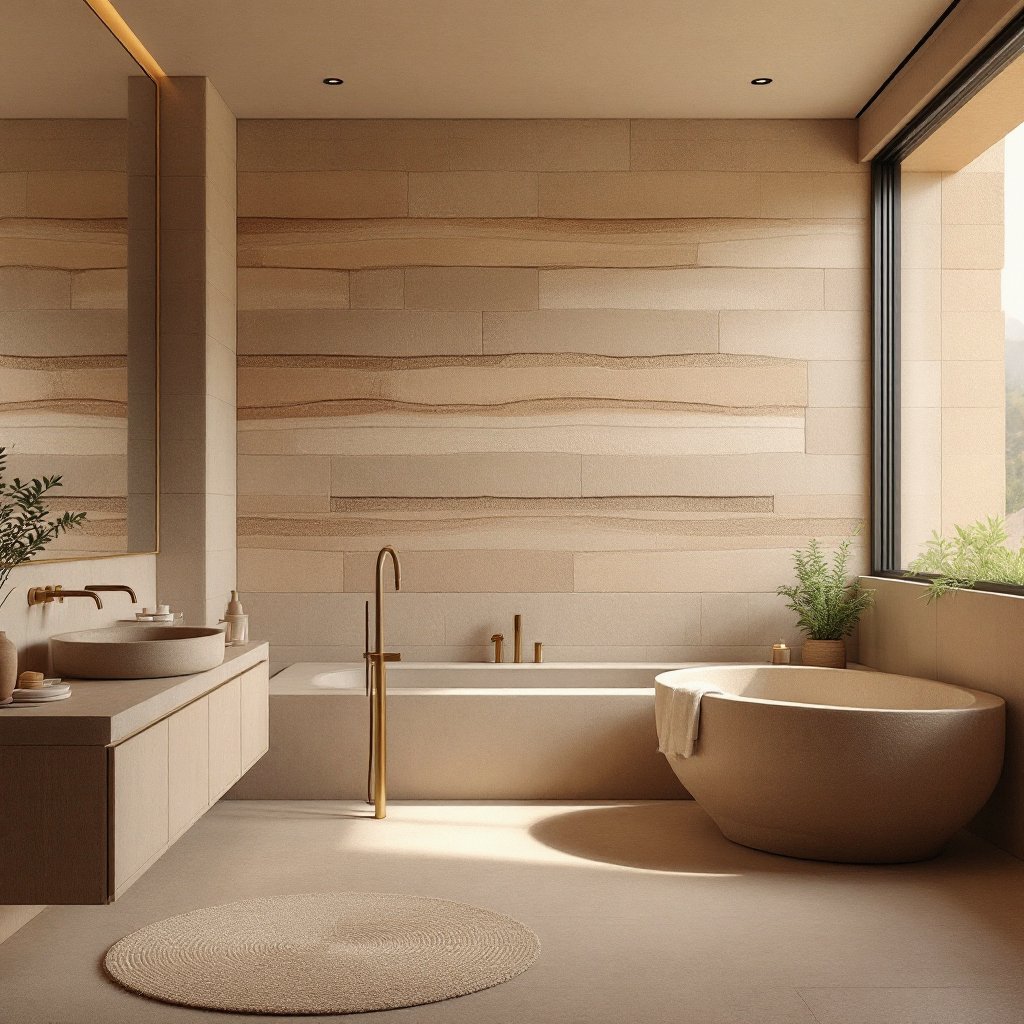
Every Indiana wall we build is the insulated-core double-wythe assembly: two independent wythes of stabilized rammed earth around a continuous insulation core, so the visible material inside and out is unbroken strata while the wall section performs to modern four-season energy code expectations. This is the same assembly we detail for Wyoming winters, and the reason is the same, insulation decides how much heat leaves, mass decides when it moves, and a cold-climate house needs both. A single-wythe desert wall would be the wrong building here, and we do not build one.
Detailing follows the same boots-and-hat rule we use everywhere: frost-depth concrete stem walls lifting the earthen mass clear of grade and splash, and generous engineered overhangs throwing weather clear of the wall faces. In Indiana the roof detailing is arguably more important than in the arid West, because the region delivers sustained rain rather than occasional storms, and openings get heads, sills and reveals detailed accordingly. The full water discipline is in good boots, good hat.
| Question | The Carmel answer |
|---|---|
| Wall assembly | Insulated-core double-wythe, 18–24" total, strata faces inside and out, our cold-climate, four-season standard, never a single-wythe desert wall |
| Freeze-thaw | Stabilized at 5–10% cement, tuned to blend and exposure, compacted to a density that resists water uptake, the mechanism, not a reassurance |
| Timeline | 16–26 months soil test to keys; ramming is warm-season work and the Indiana season is workable but not year-round |
| Budget | Turnkey $250–$450+ per square foot; $1M residential minimum; feature and landscape walls $50–$225 per square foot of face |
| Soil | Central Indiana ground is generally not usable as-is for ramming; expect an engineered imported blend, confirmed by test pits before design |
We will say the obvious thing first: we are a Wyoming company, and Carmel is a fly-to market for us. Clients are right to ask what that means in practice, and the honest answer has three parts. Ramming is a mobilized, campaign-style operation regardless of geography, a crew, a formwork system and a blend arrive, the walls go up over a defined window, and the crew demobilizes. That is true whether the drive is two hours or two days, and it is why a national specialist model exists at all in a trade with this few practitioners. Mobilization is a real line item and we price it openly rather than burying it. And the parts of the job that genuinely require continuous local presence (sitework, mechanicals, interiors, finishes) are executed with Hamilton County trades, which this market has in unusual abundance.
Permitting is the other reasonable question. Rammed earth is unfamiliar to most Indiana jurisdictions, and we treat that as our problem rather than the client’s: we arrive with stamped structural and energy documentation prepared for exactly this conversation. A wall system that is non-combustible, structurally straightforward and demonstrably durable tends to make its own friends in review once the reviewer has the engineering in front of them. Before you interview anyone for work at this level, including us, we would rather you had the seven questions in hand.
Carmel has spent a generation deciding it wanted to be a place where the built environment is taken seriously. A house made of compacted mineral ground, structural and finish at once, designed to be standing and admired when everything around it has been renovated twice, is a reasonable thing to want in a city like that.
Request a Consultation Call (307) 217-5491
