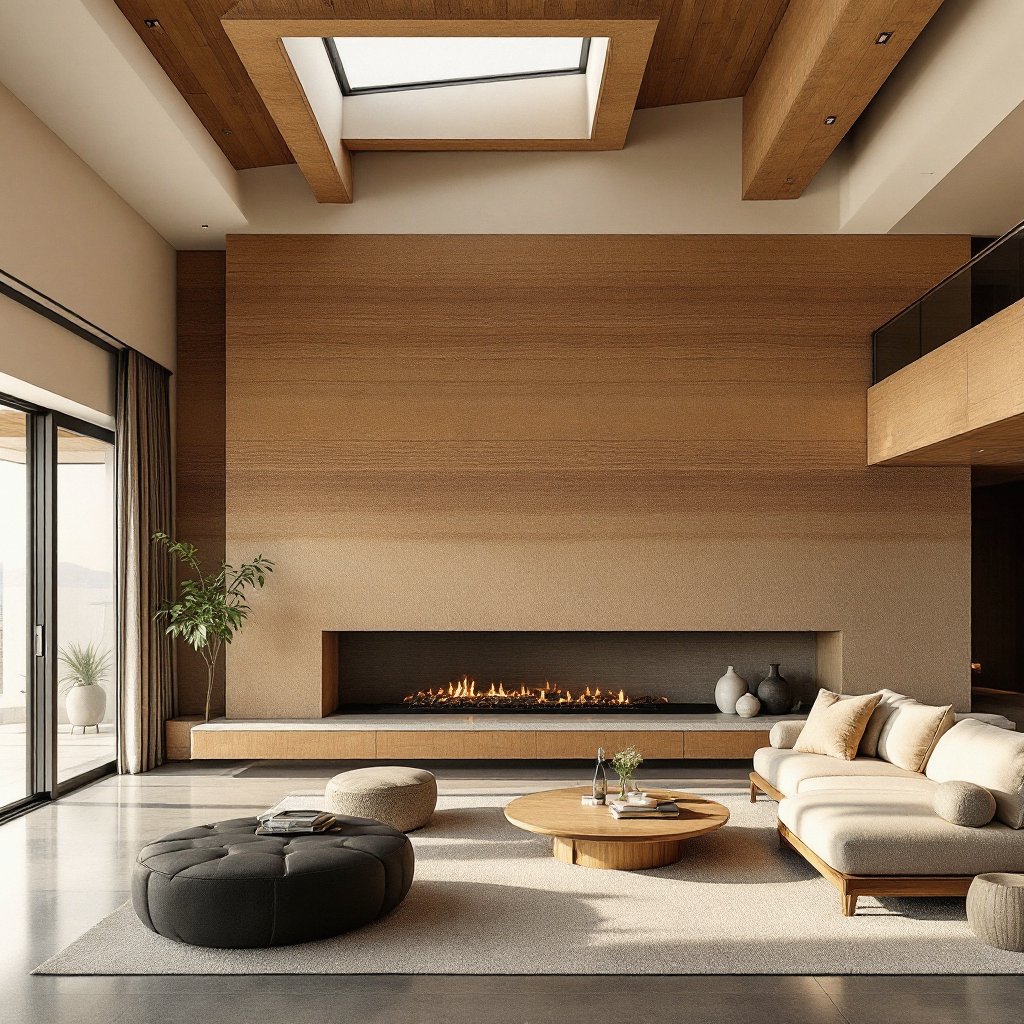
A little cement turns earth into a wall that shrugs off weather for generations. Too much and you've quietly poured a concrete wall the color of dirt. Here is where the honest line sits, and why we guard it.
Request a Consultation Call (307) 217-5491Almost every rammed earth home built in America today is stabilized: the soil is blended with a small measure of Portland cement before it goes into the formwork. Purists sometimes wince at the word, as if cement were a confession. It isn't. Stabilization is the quiet engineering decision that lets an earthen wall meet a modern building code, survive a Wyoming freeze-thaw cycle, and still be standing when your grandchildren argue over who inherits the house. The only real question is one of proportion: how much cement is enough, and at what point does the additive you reached for to protect the earth start erasing the reasons you chose earth at all.
Unstabilized rammed earth is exactly what it sounds like: the right soil, the right moisture, compacted in lifts until it's dense as sandstone, and nothing else. Built well and detailed against water, it lasts centuries: the technique is thousands of years old and the surviving proof is scattered across four continents. Stabilized rammed earth adds a binder, almost always Portland cement, at a modest fraction of the mix by weight. That binder does three specific jobs: it raises compressive strength, it sharply reduces how much water the finished wall will absorb, and it lets the wall pass the wet-and-dry durability tests that permitting officials, lenders and insurers now expect to see. In a climate with real winters or driving rain, stabilization isn't a shortcut. It's the difference between a wall an engineer will stamp and a wall they won't.
The working range is narrower than most people expect. Across the research literature and in practice, stabilized rammed earth typically runs between five and ten percent cement by weight, with something near the middle of that band doing the real work for most residential walls. Below roughly six percent the strength and water-resistance gains start to thin out; the binder is spread too thin to knit the soil together reliably. Push much past ten percent and you get diminishing returns on strength for a steepening cost in carbon, dollars and honesty. The line the field draws is bright: above about fifteen percent cement, you are no longer building stabilized earth: you are building a lean concrete that happens to be the color of dirt, and you've forfeited most of what made the material worth choosing.
The strength curve explains why the middle of the band is the sweet spot. Unstabilized earth commonly tests around 1.5 to 2 megapascals in compression, call it 250 to 300 pounds per square inch, already comfortably beyond what a two-story house asks of its walls. Add five percent cement and that figure climbs toward roughly 2.8 MPa; ten percent pushes it near 4.8 MPa; fifteen percent can reach 7.6 MPa or higher under lab conditions. Those are meaningful jumps, but read them against the load a home actually imposes and the story changes: a well-built five-to-eight-percent wall is already several times stronger than it structurally needs to be. The extra cement past that point buys you a number on a report, not a house that stands up any straighter.
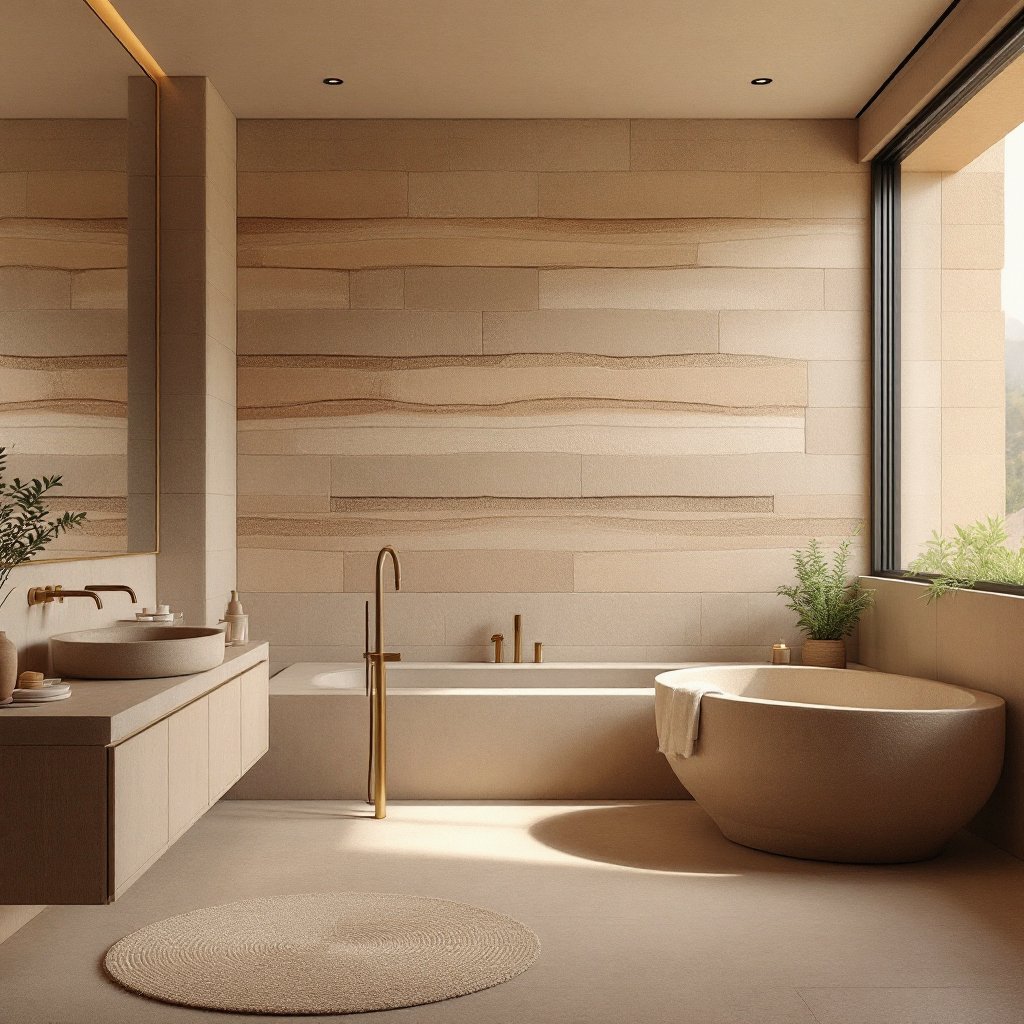
Here's the part that surprises people. For most homes, the reason to stabilize isn't strength at all, it's water. An unstabilized earth wall is perfectly strong; its vulnerability is the slow, patient work of moisture, freezing, and erosion at exposed faces over decades. A modest dose of cement collapses the wall's water absorption, so wind-driven rain beads and sheds instead of soaking in, and a freeze-thaw cycle that would spall an untreated face leaves a stabilized one untouched. This is why the cement question is really a climate question. In the high desert, where the material was perfected and the rain is rare, builders have gone light on stabilizer (or skipped it) for generations. In a four-season climate with real winters, the same wall wants stabilization not to hold weight but to hold the line against a hundred wet-then-frozen Novembers. We calibrate the dose to the ground and the sky your house will actually live under, which is a conversation about your site, not a default from a spec sheet.
We traffic in caveats around here, and this is the one that matters most. Cement is the single largest source of embodied carbon in an otherwise remarkably low-carbon wall. The whole environmental case for rammed earth (dig the soil near the site, add almost nothing, skip the energy-intensive firing that brick and block require) thins with every percentage point of Portland you add. At five to eight percent, rammed earth remains one of the lowest-carbon structural walls you can build. Drift toward the fifteen-percent territory and you've quietly imported much of concrete's carbon footprint while keeping none of concrete's cost advantage. So the restraint isn't ideological. Over-stabilizing costs you money, costs the wall its carbon story, and costs you nothing you'd have missed structurally. The discipline is in using exactly as much cement as the climate demands and not one bag more.
The percentage isn't a house rule; it's an outcome. It starts with the soil itself, its clay-to-sand-to-gravel ratio decides how much binder it needs and how well it will take it, which is why we test the ground before we quote the wall. It bends to the climate, heavier where winters are wet and cold, lighter where the desert does half the work. It answers to what the engineer needs to stamp and what the local code demands. And it respects the exposure of each wall, a sheltered interior feature wall and a weather-facing exterior on the windward side of a ridge are not the same problem and don't get the same mix. Get those inputs right and the cement percentage falls out of them naturally, sitting almost always in that five-to-ten band, tuned rather than guessed.
If you're interviewing builders, the cement conversation is a fast way to sort the craftspeople from the order-takers. Ask what percentage they typically use and why, a good answer references your soil and climate, not a flat company default. Ask whether they test the actual soil before setting the mix, or assume. Ask how they think about the carbon tradeoff, and listen for whether they've thought about it at all. And ask what they'd do differently between a desert build and a four-season one; if the answer is "nothing," they haven't built in both. The point of these questions isn't to catch anyone out. It's that the right cement percentage is a designed number, and a builder who can walk you through how they'd arrive at it is a builder who will arrive at it correctly.
Stabilization is one of those decisions where the expensive mistake and the cheap one point in the same direction: use the least cement the wall genuinely needs. It's better for the budget, better for the carbon ledger, and structurally indistinguishable from the heavier hand a nervous builder might reach for. If you want to see where your site and climate would land, that's exactly what the consultation is for, bring the address, and we'll talk about the ground under it. For the neighboring pieces of this decision, see how earth compares to concrete and what a wall costs line by line.
