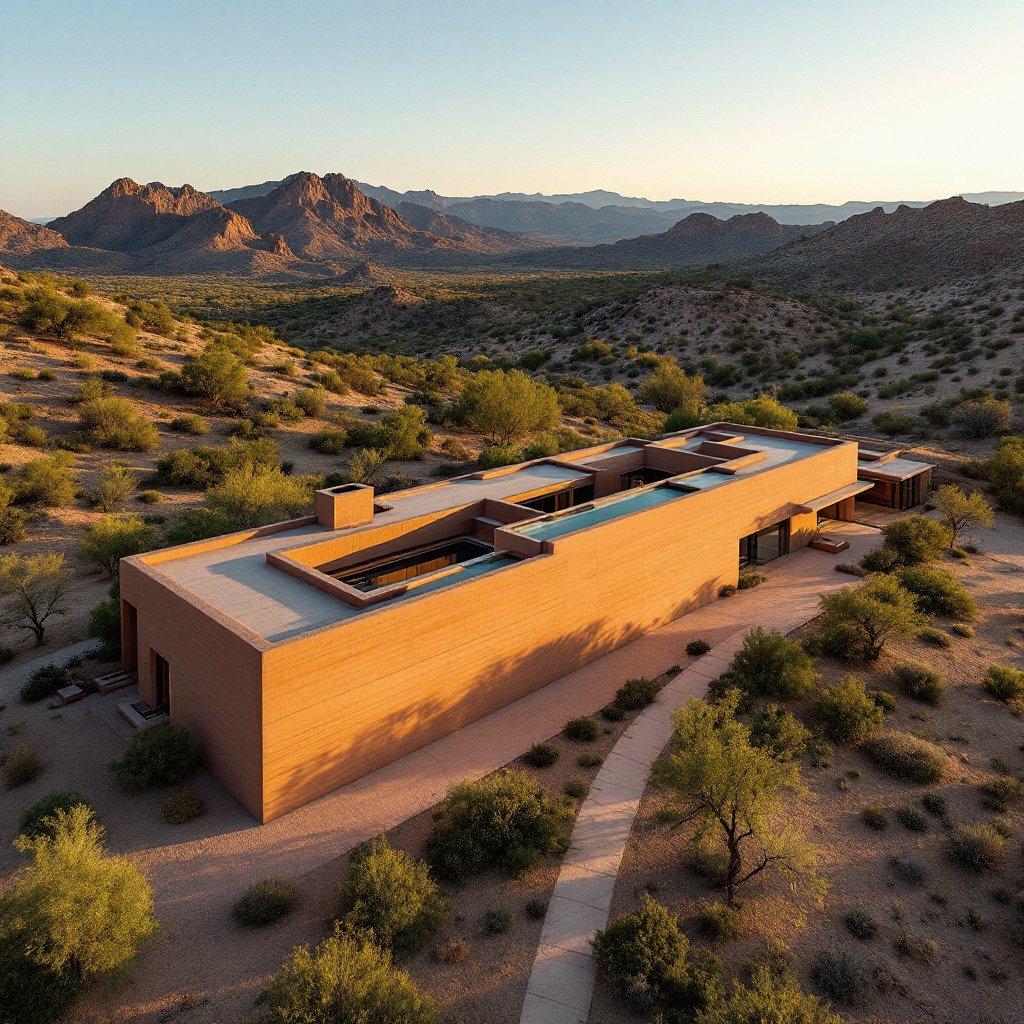
Scottsdale, Paradise Valley and the estate corridors of the Valley of the Sun, the biggest luxury market in the state where American rammed earth lives. Single-mass desert walls from $1M.
Request a Consultation Call (307) 217-5491← Back to our Arizona service area
Because the Valley of the Sun is the largest concentration of luxury desert real estate in the country, sitting a two-hour drive from the town that invented modern American rammed earth, and yet the material remains rare here at estate scale. Tucson's mid-century revival proved the physics and built the precedent stock; Phoenix built the wealth. The gap between those two facts is the opportunity. A Paradise Valley or Silverleaf owner commissioning a two-foot-thick monolithic earth house today gets something the Valley's resale market essentially cannot supply at any price: a home whose walls are the desert, in a market that has been paving over the desert for seventy years.
The climate case is the textbook one. Phoenix summers are the harshest reading on our service map, and thermal mass is the oldest working answer: 18 to 24 inches of compacted, stabilized earth absorbing the day's heat at the surface and releasing it slowly, so interiors ride out a 110-degree afternoon in calm the way a canyon wall does. Mass alone is not a summer strategy at this latitude (shading geometry does the other half) but a framed-and-sheathed house here is fighting the desert with insulation and tonnage. An earthen house negotiates with it.
At 33 degrees north, the sun's geometry is generous to anyone who bothers to read it. Summer sun rides nearly overhead (easy to exclude with our 24–36 inch overhangs, ramadas and correctly sized south glazing) while winter sun swings low and warm, exactly where mass floors and walls can bank it through the shortest days. The discipline is directional. South faces get glass, calculated shade and outdoor rooms. North faces get generous openings for steady painter's light. East takes the gentle morning. And west (the direction that breaks Phoenix houses) gets earth. A west-facing window wall here is a radiant heater you cannot turn off; we defend the west with mass, service spaces and small, deep-set openings, then let a courtyard pre-cool the evening air the house breathes at night. Night-flush ventilation recharges the walls' coolness in the hours the desert gives it away free, and the cycle starts again.
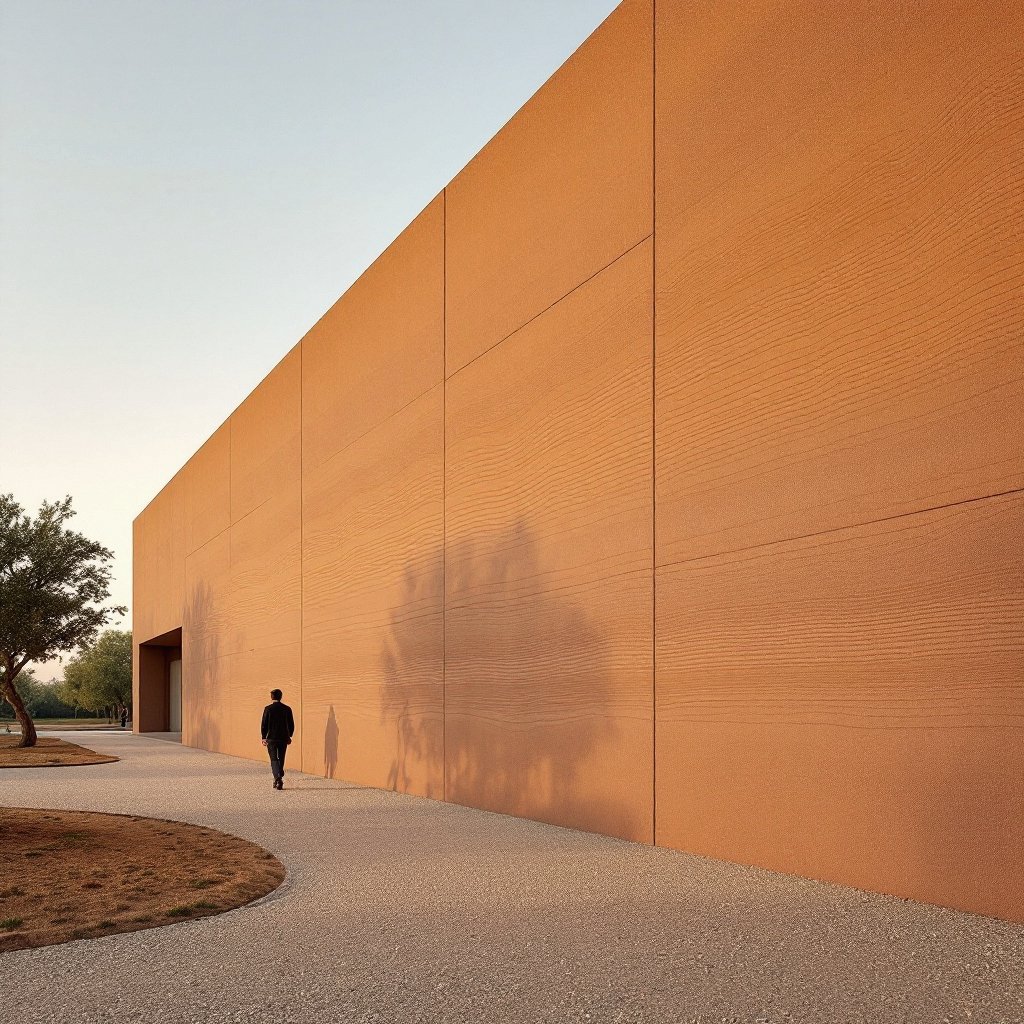
Phoenix weather is a long calm punctuated by violence: monsoon season brings dust walls and cloudbursts that can drop an inch of rain in under an hour on ground that spent months forgetting what water is. Our detailing assumes the violence. Roof overhangs and scuppers are sized to cloudburst rates rather than annual averages; concrete stem walls lift the earthen wythes above grade and splash line; finish grading moves water away fast and washes are respected as the flood infrastructure they are. Wall faces get breathable water repellents that shed liquid while letting vapor migrate out: the good-boots-good-hat formula that has kept pisé buildings dry through two centuries of far wetter weather. Dust, the monsoon's other cargo, is a quiet argument for mass construction: a monolithic wall with deep-set, well-gasketed openings simply has fewer places for a haboob to get in.
| Question | The Phoenix answer |
|---|---|
| Wall assembly | Single-mass stabilized walls, 18–24", strata face inside and out; insulated cores optional for owners chasing maximum envelope numbers |
| Stabilization | 5–10% cement content, tuned to soil blend and exposure |
| Orientation | Long axis east–west; glass south and north; mass and service to the west |
| Timeline | 16–26 months soil test to keys; summer ramming is scheduled around, not through |
| Budget | Turnkey $250–$450+ per square foot; $1M residential minimum |
The desert's best rooms have never had roofs. Long before refrigeration, Sonoran builders organized houses around courtyards because the physics work: high mass walls shade the enclosed air through the day, evaporative plantings and water cool it further, and by evening the courtyard holds a reservoir of air several degrees kinder than the street, which is exactly what the house draws through when the night flush begins. Our Phoenix plans lean on that inheritance. Entry courts that decompress arrival from the road's glare; kitchen courts that make October through May an outdoor season; pool courts where two-foot walls turn evening swims private and windless. Rammed earth is the ideal courtyard material because the wall is pleasant to inhabit (warm-toned, acoustically dead, cool to the touch in shade) and because a garden wall with visible strata is a piece of landscape, not a fence. In the estate corridors, where lot lines are generous but neighbors are real, the courtyard plan buys something scarcer than square footage: enclosure without smallness.
The Phoenix basin's ground rewards judgment. Caliche, the cemented calcium layer that Valley excavators curse, demands honest sitework budgeting but repays it with superb aggregate character; granitic decomposed soils off the McDowells and Camelback's flanks bring sparkle and structure; and the basin alluvium runs a buff-rose family that rams into warm, quiet banding. Where owners want more heat in the palette, iron oxide joins the blend at the mixing stage, laid down in courses the way sediment actually falls. Every parcel gets test pits before design; the difference between a good wall and an unforgettable one is often two pits and one oxide decision. Commercial work follows the same logic, resort arrival walls, spa interiors and tasting rooms across the Valley's hospitality economy run $50–$225 per square foot of wall face.
This is friendly territory. Arizona's jurisdictions have processed stamped rammed earth documentation for decades (the deepest precedent pool in the country sits one county south) and Maricopa County plus the Valley's municipal departments handle engineered custom construction as routine business. Design review in Scottsdale's gated communities and Paradise Valley responds to the material's mockup-first process: a physical strata sample panel wins rooms that renderings cannot. Insurance conversations start ahead: a mineral wall contains nothing that burns, which matters on the wildland fringes of Carefree, Cave Creek and the McDowell foothills, and appraisal is easier in Arizona than anywhere else we build because the comparables genuinely exist. If a lender hesitates elsewhere, they relax here. The state has been closing loans on earth walls since before most loan officers were born.
Phoenix projects begin the way all of ours do: a conversation about land, program and budget, then test pits, then a physical sample panel of your parcel's ground before anyone falls in love with a rendering. If you are still shopping for the lot, bring us in early: we will walk candidate parcels and read orientation, washes, access and soil before you close, because the best Phoenix earth houses are chosen at the land stage. Residential builds start at $1M; the estate corridors this page describes typically run well past it, and the material rewards every additional foot of wall.
Request a Consultation Call (307) 217-5491
