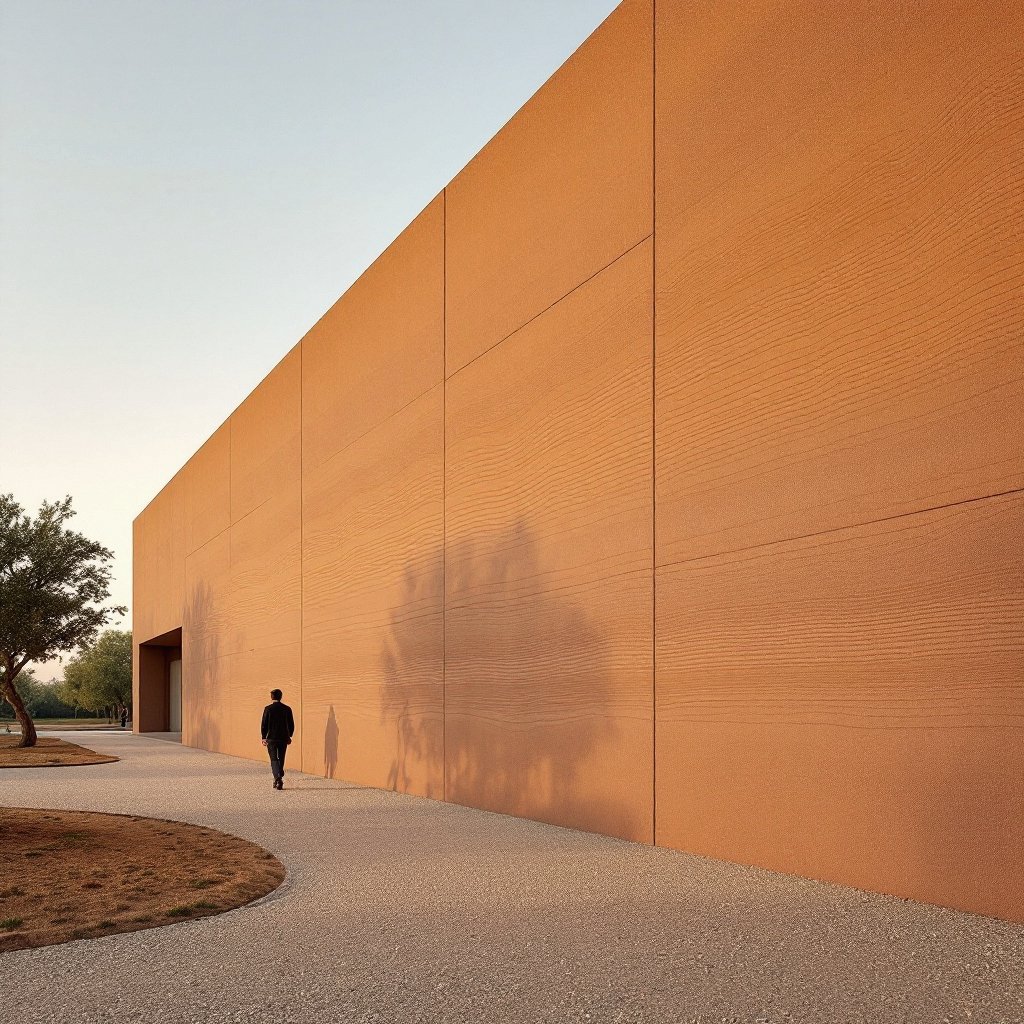
An eighteen-to-twenty-four-inch mineral monolith has nothing to offer a fire. In the wildland-urban interface, that is worth a great deal, and it is not a force field. Here is the honest accounting.
Request a Consultation Call (307) 217-5491Every mountain builder now works with a season the old pattern books never named. Snow load, wind load, seismic: those have governed structural drawings for a century. Fire weather is newer to the list, but in the interior West it has earned a permanent place: the stretch of late summer when the humidity falls out of the air, the wind organizes itself into something with intent, and everyone who lives within sight of timber checks the horizon out of habit. The professionals have a term for the territory where houses meet wildland fuels (the wildland-urban interface) and it is where an enormous share of new Western construction now happens, because the interface is precisely where people want to live. The view lots at the edge of the forest. The benches above the sagebrush draws. The pine-fringed parcels of the high country. The most desirable ground in Wyoming, Utah and Arizona is, almost by definition, ground where fire belongs to the ecology.
We build in that country, so we owe our clients a straight answer to the question they eventually ask: what does a rammed earth wall actually do when fire weather arrives? The answer is genuinely good. It is also more specific than the mythology, and the specificity is where the real value lives.
Start with the chemistry, because it settles the first question completely. A rammed earth wall is mineral through and through, sand, gravel, silt and clay, compacted in thin lifts until the loose blend becomes a monolith with the density of sedimentary stone. (If the material itself is new to you, our full explainer is the place to begin.) There is nothing organic in that wall to oxidize. You cannot burn it for the same reason you cannot burn a canyon wall: fire is a chemical reaction that requires fuel, and an inorganic mineral mass offers none. Wood framing chars and fails. Foam insulations melt and off-gas. Vinyl sags at temperatures a summer attic flirts with. An earth wall is already the thing fire reduces other materials to, mineral, inert, finished with the argument before it starts.
"Non-combustible" is a precise term in building, not a marketing flourish. It describes a material that contributes no fuel to a fire: that will not ignite, sustain flame, or feed the event in any way. Earth, stone, brick and concrete have carried that description for as long as the building trades have existed, which is why the world's fire-conscious traditions, from courtyard houses in hot dry climates to the masonry party walls that old cities required between rowhouses after their great fires, have always been mineral traditions. A monolithic earth wall belongs to that lineage. When we ram a wall eighteen to twenty-four inches thick and finish it with earthen or mineral coatings inside and out, the entire wall assembly, from face to face, is made of material that simply does not participate in combustion.
Here is where the honest essay parts company with the brochure. Decades of post-fire investigation have taught the building-science community a consistent lesson: most homes lost in wildfires are not overrun by a wall of flame that batters down the structure. They are ignited by embers, firebrands lofted on the wind, sometimes arriving well ahead of any flame front, drifting down by the thousands and hunting for fine fuel. Embers lodge in the needle litter of a gutter. They slip through attic and crawlspace vents and find the dry kindling of a roof structure from the inside. They collect under wooden decks, in the mulch bed against the siding, in the corner where the fence meets the house. Radiant heat and direct flame do their damage too, particularly to glazing, but the ember is the assassin, and the assassin goes for the openings and the fine fuels, not for the broad field of the wall.
Which means a truthful builder has to say this plainly: the wall mass is rarely the first point of failure, even on a conventional house. A home is a system, and in a wildfire the system is tested at its most flammable and most porous points, the roof covering, the vents, the eaves, the windows, the deck, the five feet of ground touching the foundation. No wall material, earth included, turns a house into a force field. Anyone who tells you otherwise is selling something other than building science.
So what does the earth wall buy you? It removes an entire category from the fuel ledger, and not a trivial one. Combustible cladding is a genuine participant in home ignition. Embers lodge in the lap joints and trim details of wood siding and smolder there patiently. Flame impingement from a burning shrub or a neighboring structure can light a combustible wall directly, and once a wall face is burning, it carries fire upward into the eaves and the roof: the exact places a house least wants it delivered. Wall assemblies with ventilated cavities behind their cladding add a further liability: a concealed vertical channel that can pull fire upward like a flue.
A monolithic rammed earth wall deletes all of it. There are no lap joints for an ember to nest in, no cavity behind a rainscreen, no sheathing, no combustible siding, no exterior foam waiting behind a thin coat of stucco. There is only mineral mass, eighteen to twenty-four inches of it, with mineral finishes on both faces. An ember that lands against rammed earth has landed on stone; it goes out. A burning shrub against the wall base scorches the surface (a mark, perhaps, in the way that a century of weather leaves marks) and ignites nothing, because there is nothing to ignite. The wall goes from being an item on the fuel ledger to being absent from it entirely, and the fire's path from landscape to roofline loses one of its most reliable highways.
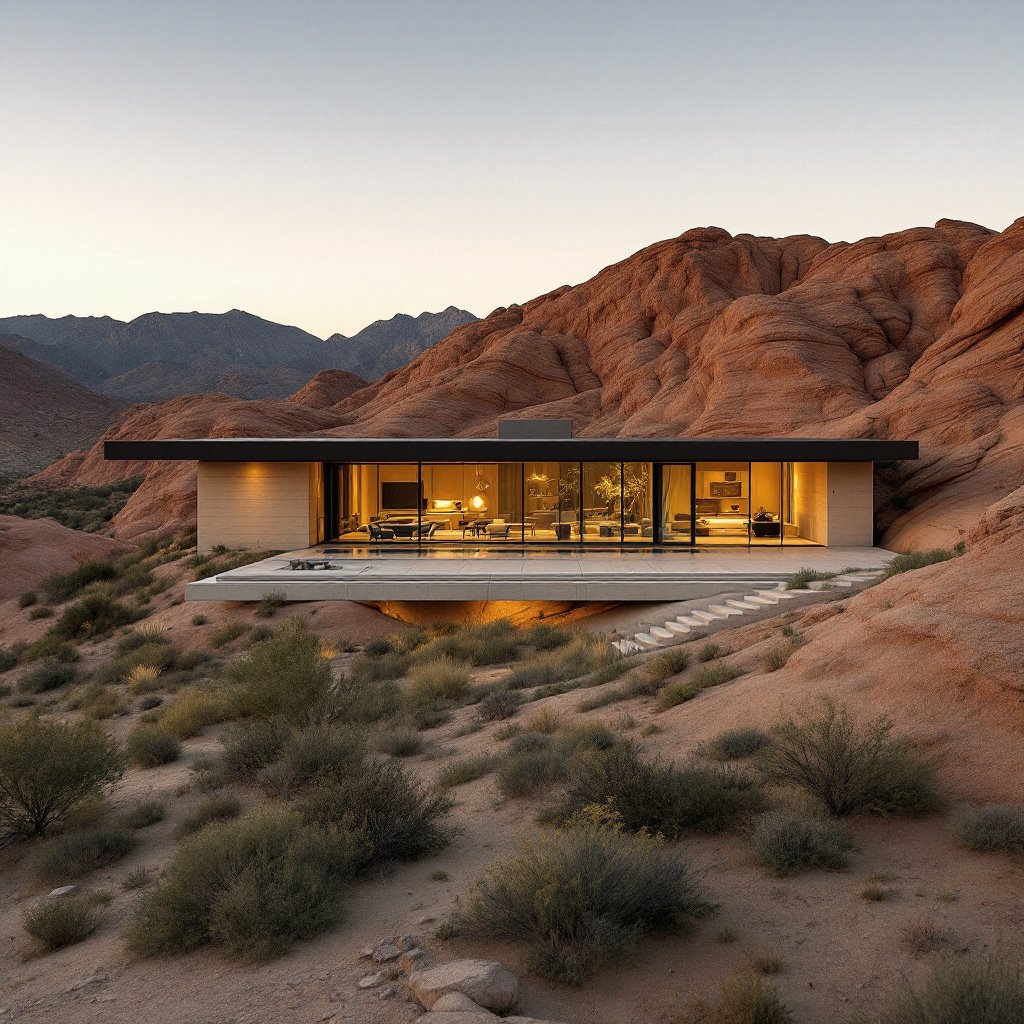
Thickness earns its keep here too, in a way thin non-combustible claddings cannot match. A wildfire's radiant heat is intense but brief at any given point: the front moves, the burning vegetation is consumed, the pulse passes. Against that pulse, mass buys time. Heat entering the face of a two-foot earth wall must migrate through hundreds of tons of dense material to matter on the interior, and dense earth conducts heat slowly; this is the same thermal lag that keeps these houses steady through a January cold snap or an August afternoon. Masonry and earth construction have been used for fire separation for centuries precisely because a thick mineral wall does two jobs at once: it refuses to burn, and it is profoundly slow to pass heat along. A thin fiber-cement plank is non-combustible; a rammed earth monolith is non-combustible with a fortress's patience behind it.
Now put the wall back into the whole. Because ember attack targets openings and fine fuels, the wildfire-serious home is a set of details, and the earth wall's quiet gift is that it lets you concentrate your attention (and budget) on the details that remain. Defensible space first: the practice, promoted by fire agencies across the West, of managing vegetation in zones around the structure, with the ground nearest the house kept lean, clean and green, and the first few feet ideally free of combustible material altogether. Gravel and stone against a rammed earth base is not a compromise here; it is the material's natural landscaping anyway. Then the crown of the house: a Class A roof covering, metal or tile, with no debris-collecting complexity you can avoid. Ember-resistant venting with fine metal mesh, or unvented assemblies that remove the pathway entirely. Non-combustible eaves and fascia. Tempered glazing in exposed orientations, because glass is the wall's honest weak point: the opening that radiant heat can break and embers can enter. Deck structures in non-combustible materials, or no deck on the fire-facing side at all.
None of this is exotic on a build at our level. When a home is being executed turnkey at $250 to $450-plus per square foot, the increments that harden the roof, the vents and the glazing are small against the whole, and they complete a system in which the largest single surface of the house, the walls themselves, has already been removed from the fire's menu. That is the correct frame: not a fireproof house, which does not exist, but a house whose envelope gives embers extraordinarily little to work with, wrapped in ground that has been managed to keep flame at a distance.
This is not an abstract exercise for us. Wyoming is our home state, and anyone who has spent an August between the Tetons and the plains knows the particular stillness of a smoke-hazed afternoon. Utah's benches and canyon rims put some of the state's finest homesites directly against fire-adapted oak brush and juniper. And Arizona (the American heartland of this material) is more than saguaro country; its high country runs through pine and chaparral where fire has always been part of the land's own maintenance schedule. In all three, the calculus is the same: the land most worth building on is land where fire must be respected, and the respect belongs in the drawings, not just in the evacuation plan. A wall rammed from mineral earth, sitting in a managed clearing, under a metal roof, behind tempered glass, is that respect made physical.
There is also a quieter, more bureaucratic reality worth naming. Insurers have grown steadily more attentive to construction in the wildland-urban interface, and homeowners across the West are being asked harder questions about materials, roofing, venting and defensible space than they were a decade ago. We make no promises about anyone's policy (that conversation belongs to you and your carrier) but a home that can answer those questions with "the walls are two feet of mineral mass, the roof is Class A, the vents are ember-resistant, and the first five feet are stone" is a home having a very different conversation than most.
We keep a standing page that weighs this material's advantages against its costs, because we think candor is a better salesman than mythology. Wildfire belongs on that ledger the same way. The honest entry reads: rammed earth removes the wall (the largest surface of your home) from the fuel equation entirely, resists ember attack the way stone does, and backs its non-combustibility with a depth of mass that thin claddings cannot imitate. It does not fireproof a house by itself, because nothing does; the roof, the openings and the landscape still have to be designed with the same seriousness as the walls. Build the whole system, and the earth wall becomes what it has been in fire-wise traditions for centuries: the one element you never have to worry about, standing calm at the center of a plan built around the elements you do.
If you are holding a piece of high country and thinking about what deserves to stand on it, a consultation is where the conversation starts. Bring the site, the season and the questions. We will bring the honest answers, fire weather included.
